W Trek Survival Guide

OLYMPUS DIGITAL CAMERA

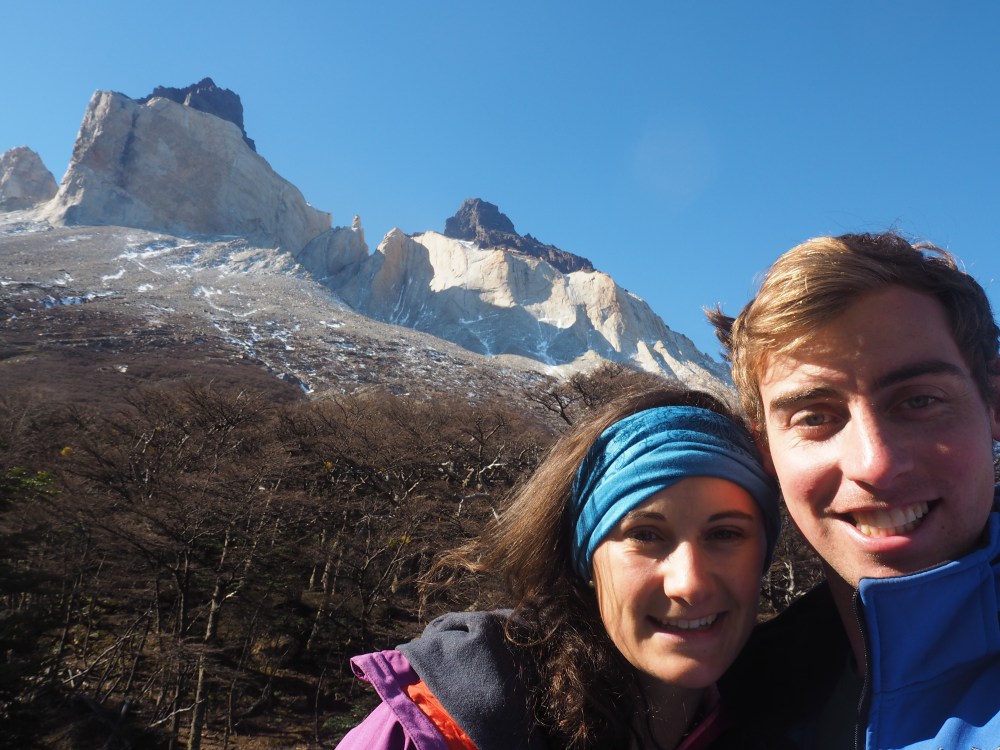
Torres Del Paine

W Trek Survival Guide
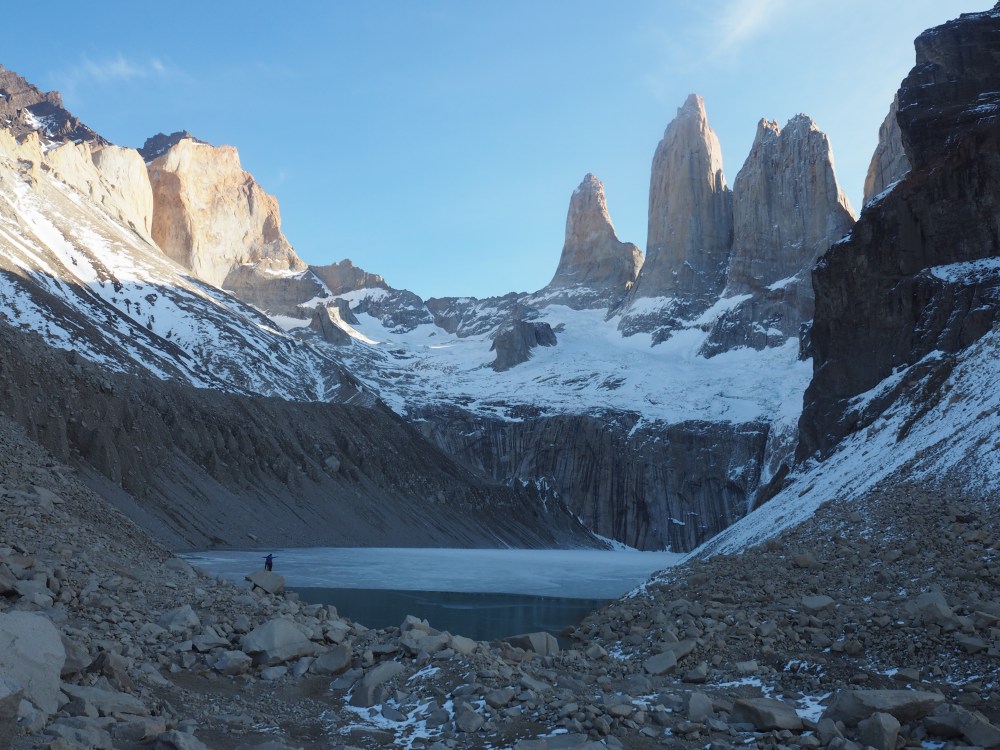
Patagonia is an area in the south of South America and is shared between Chile and Argentina. To fly into Patagonia within Chile can be cheap as long as you fly in-country (e.g. we flew from Santiago to Punta Arenas within Chile).

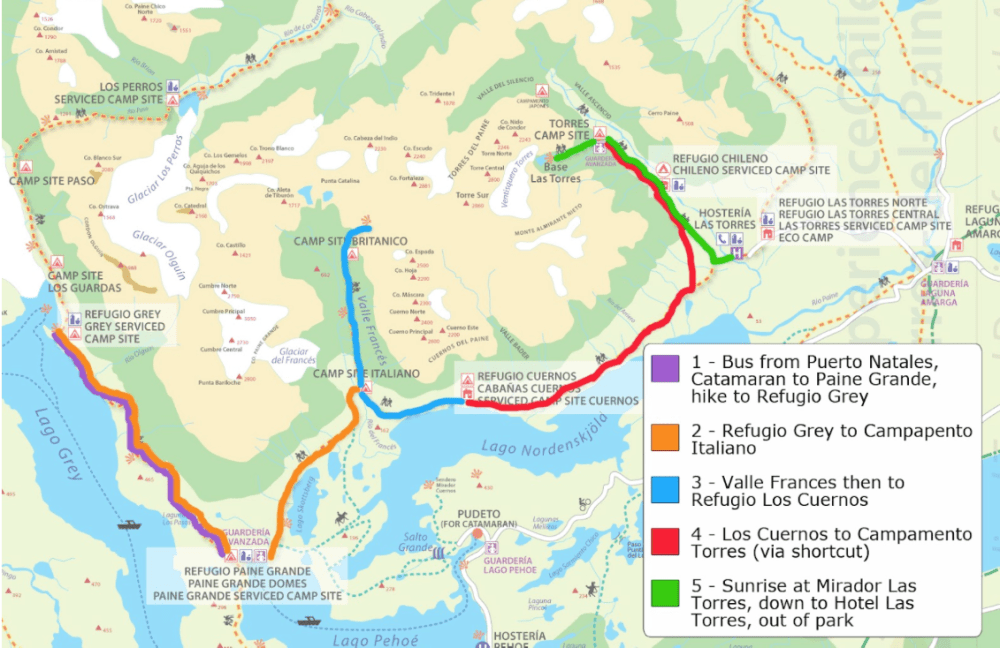
We chose to explore Patagonian mountains by foot through the famous Torres Del Paine National Park following the world renowned ‘W-Trek’.The trek is nearly 100km starting from ‘Administration point’ or 86km starting at Paine Grande, taking a catamaran across the lake to the starting point as can be seen on the route map below:
screen-shot-2016-12-07-at-17-48-44

5 Day route map with campsites

When to go:
In our opinion the best time of year to do the trek is the first or second week in September before the peak season starts from Mid-sept onwards until early in the year. If you go later on in the year you will need to book flights, hostel in Puerto Natales and, refugios in the park well in advance. The only downside of going early is the unknown weather conditions, which can change by the hour.
OLYMPUS DIGITAL CAMERA

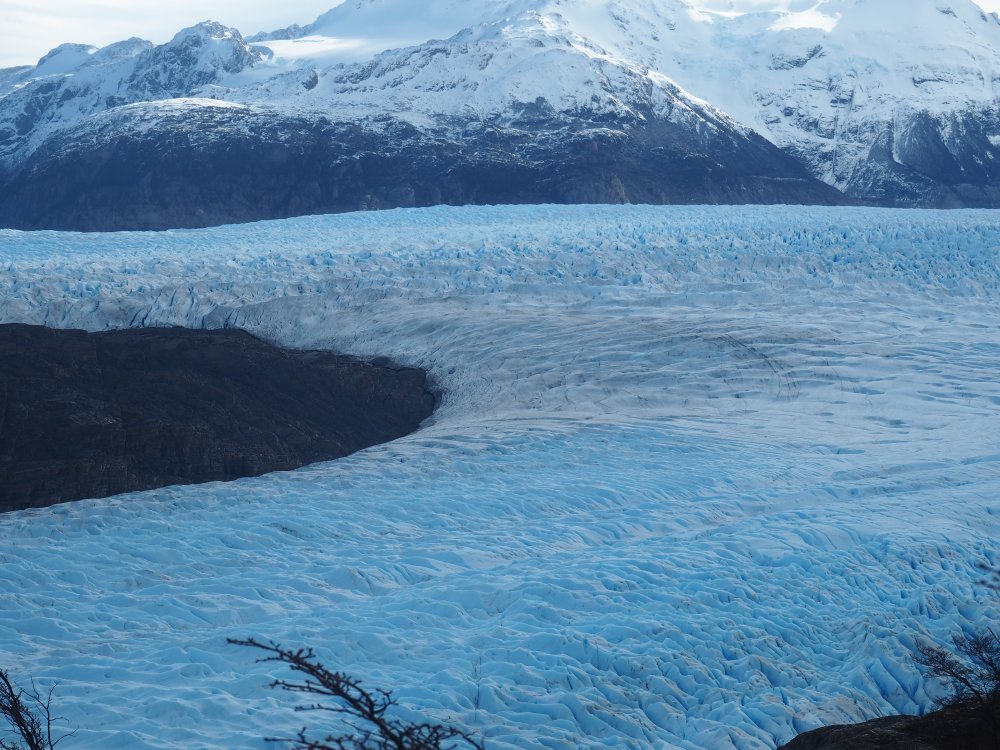
Glacier Grey

How to get to the National Park:
From Punta Arenas airport there are mini bus transfers into town which will drop you at the bus station. From the bus station you want to get a bus to Puerto Natales where all trekkers stay before going to the National Park. Up to 6 BusSur coaches leave daily to Puerto Natales between 7am and 7pm.

What next ?
If you are lucky you will be able to stay at Erratic Rock Hostel (its awesome and has EVERYTHING you need for the trek)! If not the Singing Lamb as well as other hostels in the town are comfortable and close to rental shops etc. If you are not staying at Erratic Rock then get yourself there on arrival for a free briefing on the trek, and you can hire all the gear you will need at a reasonable price too as well as buying your all important bus ticket to the National Park which leaves from the bus station at 7am daily.

Planning the W trek?
On arrival do a 5 day weather forecast check and you can set your dates for the trek. 5 days is the minimum time you can take to complete the W and if you have time to be flexible you can take more time. Go onto the Torres Del Paine website to check if there are any fees required for camping sites or if you are staying in refugios you will need to check for availability (otherwise you have to camp in tents they provide if beds are full).

What to take?
If you have space when traveling to do the trek you may bring the flowing items with you, but we hired and bought most of the equipment on arrival to Puerto Natales.
Must- haves: Walking boots, thin layers, thick socks, head torch, hat, gloves, big rucksack and water bottle/flask, map (collect on arrival at park).
Hire: tent, 4 season sleeping bag, sleeping mat, poles and mess kit (large water bottle, stove, pot, plate, mug, spoon).
Buy: Lighter, gas canister (enough gas for your trip), waterproof trousers, light rain coat and bin bags!
Food: Enough food for the trek plus some more… buy sandwich bags to separate food into days to avoid eating too much on day 1 and to get rid of unwanted packaging and allow for resealing. You can prepare by making day 1 lunch night before as well as pre cook some pasta, and boil some eggs. Best advice we had was to break a few eggs into a plastic bottle and squeeze air out and seal -cook for breakfast or dinner for; scrambled eggs on the trek! You must take rubbish with you hence bin bags…

Breakfast: Porridge oats, powdered milk and jam
Lunch: Pack of wraps, pack of sliced cheese, chorizo, dried fruit and nuts for snaking throughout day.
Dinner: Pasta, super noodles, instant soup, tea/coffee, packet sauces and chocolate LOTS of CHOCOLATE!!!

Water: The water in the park from rivers, streams and waterfalls is very drinkable, take water from areas upstream of campsites.

Camp Sites and Refugio’s
If you choose to camp every night you will be camping at a minimum of 4 campsites during the trek and most are free (some are not!). The first site that will cost will be ‘Grey’ on night 1 (should you choose to stay there) it will cost 5000 Peso if pre-booked (this can be pre booked in Puerto Natales) or 10,000 Peso if you are a ‘walk in’. The refugio at Grey will vary in cost depending on the level of board you choose.
The second campsite that must be noted as one to PRE-BOOK is Los Cuernos . If you wait to pay on arrival you will have to pay to camp (a considerable bit more than any other site)!
W - French Valley Down - Hayley Arms Out.JPG

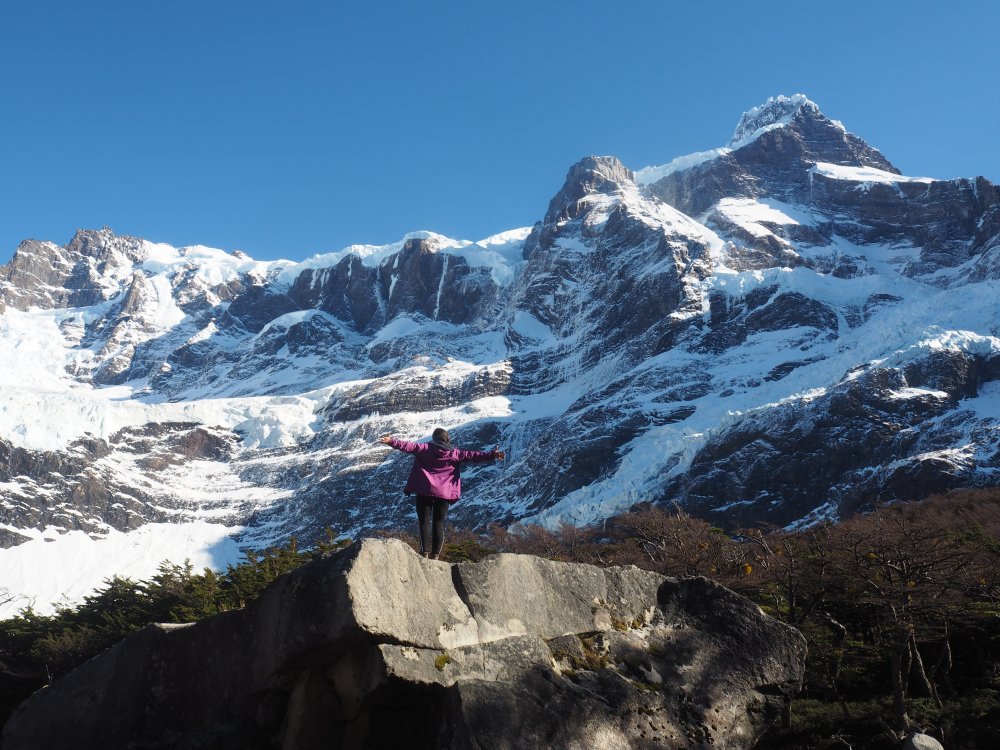
French Valley


We hope that this guide is helpful as we could not find a ‘how to guide’ online for the trek and picked up the information along the way as we explored the park. Please feel free to comment, share and feedback on the blog. Argentina and Chile blog to follow!
The Olympic Games in Rio and Brazil

OLYMPUS DIGITAL CAMERA

Rio De Janeiro

The 2016 Olympic Games were hosted in Rio de Janeiro and we were lucky enough to attend! We had bought a few tickets before leaving the UK through CoSport as we planned to be in Rio for the first week of the games.We have had limited wifi across Patagonia and now are able to update you with event news and exciting gadgets used along the way…

We increased our ticket count when we arrived- buying; rugby 7s final tickets along with, equestrian and athletics for Super Saturday. If you are ever going to a games in the future try to buy straight from the official website rather than a reseller to avoid disappointment and wasting half a day waiting to collect.

We were picked up at the airport by our hostel and even though it was 6am and check in was not until 2pm, we were able to get into our room to get some much needed sleep! Our hostel Samba Green was situated in the area of Botofogo, perfect location for us; a 20 min walk to Copacabana beach, next to the metro for transport links to all Olympic venues and had restaurants and shops really close by too. It’s worth mentioning here that the staff in the hostel could not have been more helpful and it was by far the best service we have had!

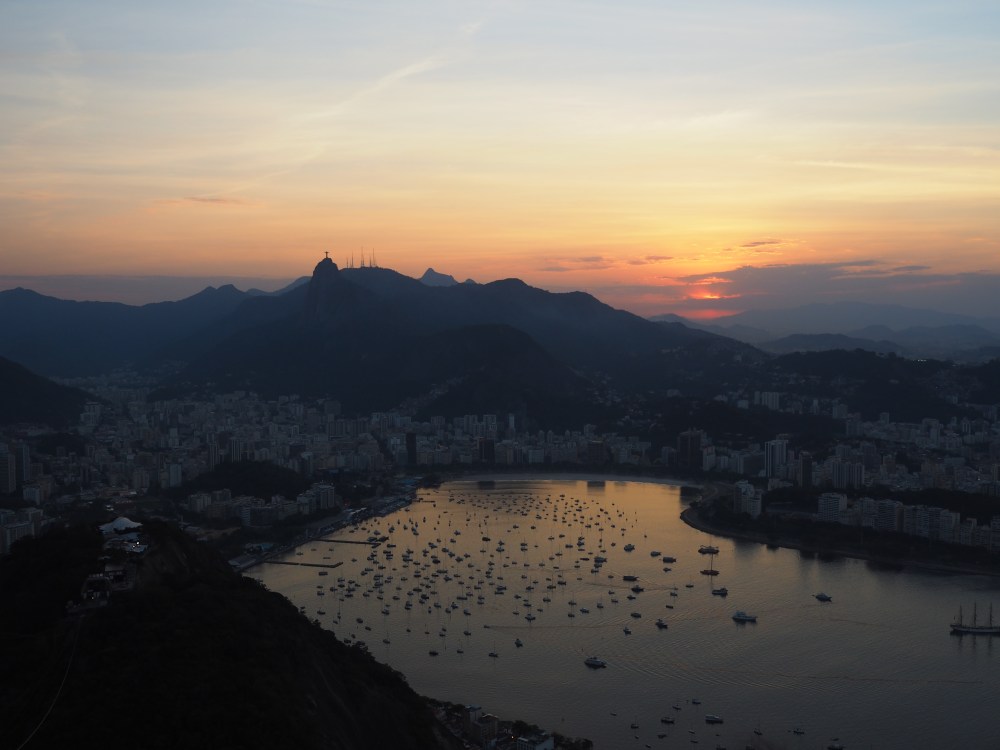
Our afternoon and evening on day 1 did not disappoint; we headed up the famous Sugar Loaf mountain for views over the city. The ticket cost 70 reals and we had to take 2 cable cars to reach the top, well worth it when you see the view! We stayed for sunset and could see across to Christ of Redeemer, the airport, Olympic Stadium and Copacabana beach.

This slideshow requires JavaScript.

Day 2 was the start of our Olympic spectating and we travelled (very easily) to the Olympic park in Barra for the Women’s gymnastics preliminary rounds. We were in the afternoon session which saw; GB, Brazil and 6 other countries complete for places in the final. The atmosphere was amazing especially with the Brazillian home support for their gymnasts.

Our next day at the games was a busy one with 2 events to watch in 2 different venues. In the morning we travelled to Deodoro to watch the Cross country element of the equestrian One Day Eventing. We picked a spot at one of the water jumps beside some fellow Team GB supporters. We waited to see Pippa Funnel on ‘Billy the Biz’ before heading to see some other fences and the combination in the second water.

It was really easy to catch our transport from Deodoro to the Olympic Park, especially as we had purchased Olympic travel cards which were contactless and allowed us on any public transport for 7 days. The next event was the men’s gymnastics – all round team final and the Team GB men were looking strong amongst the competition. We had good seats near to the pommel horse, rings and vault. The competition was very close between Japan, China, Russia and GB for the top spots. The British boys gave a brilliant performance on all apparatus and did extremely well to place 4th being such a young team.

Our 4th event was the men’s (C1) canoe slalom in the X-Park where the BMX demonstration events also took place. We joined some other novice canoe slalom spectators, as well as our Canadian friend Lauren on the side of the course. We were really impressed at the level of skill and concentration shown by the athletes in this sport as the margins were very small at the top of the table. We saw the semi-final qualifiers,where the top 10 advanced onto the finals. Team GB made it into the final and we were able to stay and watch. Winner Gargaud from France set a very fast time of 94.17 seconds which the rest of the field were unable to beat.

The next set of tickets were for the first of 2 rugby sessions at Deodoro stadium, where team GB took on a number of teams for qualification to the semis. Our first game was against The All Blacks and we won 21-19. We then went onto beat Argentina in a tight match in the quarter finals and then beat South Africa in the semi final. We were lucky enough to get tickets to the rugby final’s where we saw GB v Fiji. We were beaten 43-7, Fiji were by far the better team and favourites coming into the competition. The atmosphere at the rugby 7s was fantastic as it always is at 7s tournaments! We joined friendly fans from all over the world.

The following day we were in court 1 for 10 hours of Olympic tennis action. We landed very lucky with these tickets; not only were they £25, first up was Andy Murray in his quarter final match! This was a 3 set tie breaker match against American Steve Johnson, Andy looked strong in the first set winning 6-0, then the American fought back winning the second set. After 2 hours of tennis Andy won the third set tie breaker to advance onto the semis the next day before beating Del Potro to claim Gold.

Following the excitement of the Murray match was another high quality game between Gail Monfils and Kei Nishikori. We then saw the Bronze medal men’s doubles match between Canada and USA, followed by a mixed doubles with Venus Williams and playing partner representing the USA against Italy. During our session on court 1, the organisers opened up Centre Court where the Gold medal men’s doubles match was taking place. We had free entry to this match and were able to get very close to the action to see Nadal and Lopez win gold for Spain against Romania and stayed for the medal ceremony too.

This slideshow requires JavaScript.

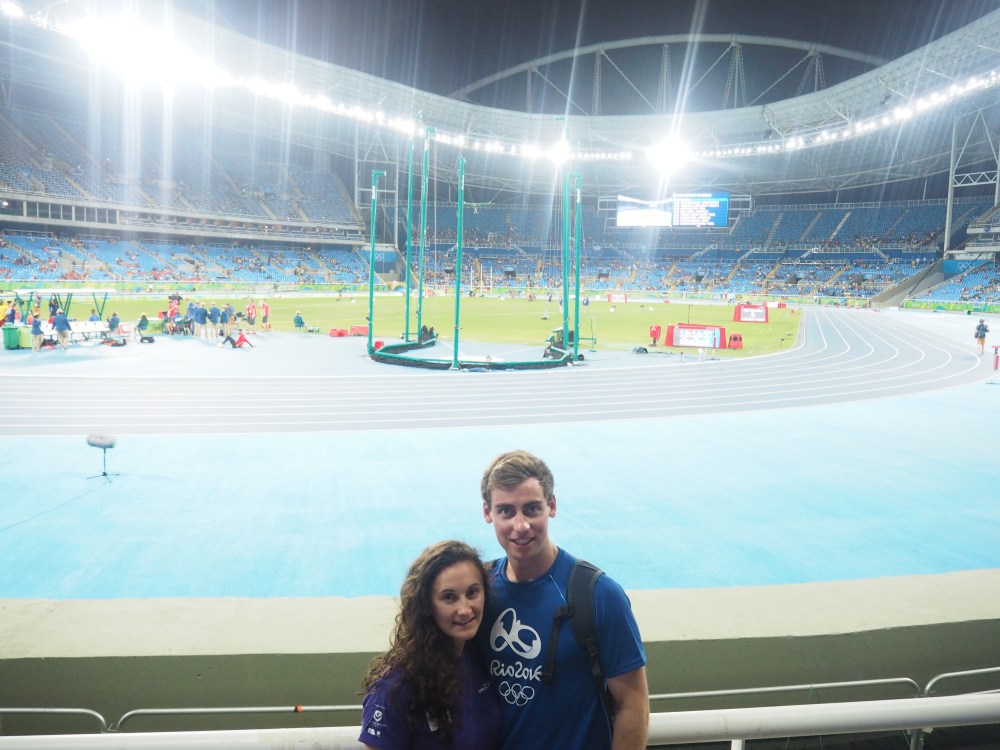
Following the tennis was ‘Super Saturday’ where we saw many different events, but the stand out events for us were watching Greg Rutherford, Mo Farah and Jess Ennis-Hill attempt to repeat their performances from 2012 and win gold in the long jump, 10,000m and the heptathlon. Unfortunately, these achievements weren’t quite matched, with Greg winning Bronze, Mo winning Gold (after falling in the early stages of the race!!) and Jess winning Silver. However, seeing GB athletes win these medals, we still consider this to be a Super Saturday!

As you can see in the photos above we were able to make use of PolePod  (bottom right, click link to see more) to take photos with our digital camera and GoPro and could easily change the angle to suit the photo. We have made use of PolePod; skiing, hiking, at events, for Panoramic photos and more! If you want more info about PolePod you can click this youtube link or email inventor Andrew Davidson:  a.davidson@asd-zine.co.uk

After a busy week of events we headed north for a couple of days to see one of Chris’s school friends and his wife who live in Belo Horizonte. This was a nice break from the rush of the Olympics in Rio and it was great to catch up with old friends.

We then returned to Rio for 2 final events; 200m final at the athletics and the Women’s Hockey final. First, the highlight of the athletics being the 200m final in which we saw Usain Bolt win his 8th Olympic Gold! We also saw Scottish athlete Lynsey Sharp, 1500m semi-fnal and a new Olympic record set in the Shot Put of 22.52 metres!

Our 10th and final event was the Women’s hockey final at Deodoro Stadium, a highly anticipated match with GB taking on world number 1’s Holland… And what a match it turned out to be, as after normal time the score lay at 3-3 draw and the teams went onto a shoot out against the goalie. GB won 2-0 in the most spectacular fashion after having played some unbelievable hockey and maintaining their composure throughout the whole match. The icing on the cake for us…getting a photo with one of my fellow Youth Sport Trust mentor’s and now Olympic Champion Alex Danson! A moment we will never forget!

Leaving Rio on such a high was an incredible feeling, we had the most amazing Olympic games as spectators! It was also a great feeling to be part of a friendly and successful games, despite the negative media coverage that any Games seems to attract, Rio proved the haters wrong! We loved Rio as a city, felt safe the whole time and could not have wished for a more incredible experience, thank you Rio!

We took some down time after the Olympics to enjoy the Brazilian coast, firstly  the beautiful island of Ilha Grande, before moving onto the coastal town of Paraty.

This slideshow requires JavaScript.

We are now nearing the end of our South American adventure and what an adventure it has been! We will update with activities from Argentina and Chile before we take on our next continent…Africa!

Speak soon,

Hayley and Chris

OLYMPUS DIGITAL CAMERA

Patagonia 

Bolivia : La Paz, Salar de Uyuni & Lake Titicaca

Following the inca trail, we flew to LA Paz in Bolivia and stayed in the popular hostel- Loki in the centre of town. On arrival we managed to book an overnight bus to Uyuni in the south of Bolivia to meet our Canadian friends for the Salt Flats tour.

OLYMPUS DIGITAL CAMERA

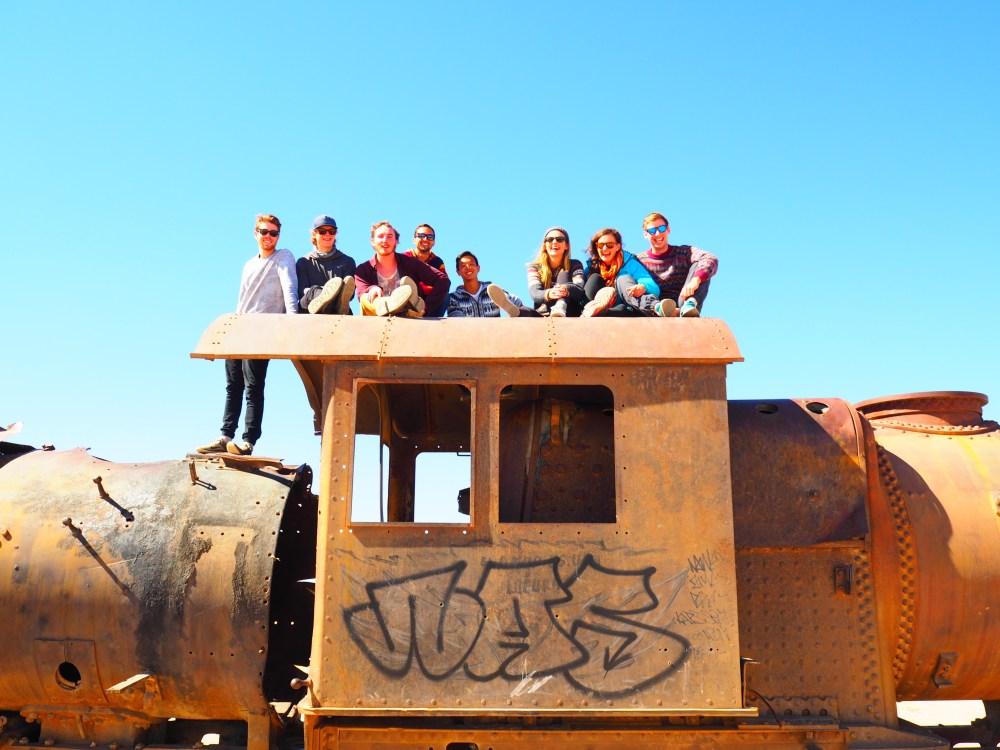
Train cemetary

This option of organising your own transport to Uyuni and then picking up a tour package on arrival is much cheaper than an inclusive trip from LA Paz. We went directly to the To Do Truismo office to buy our tickets but you can also book online, (you do need about 48 hours notice to receive confirmation). For transport to Uyuni and a 2 day salt flats tour with food, accommodation and transport included,we payed the equivalent of £65 compared to cheapest tour option from LA Paz starting at £135.

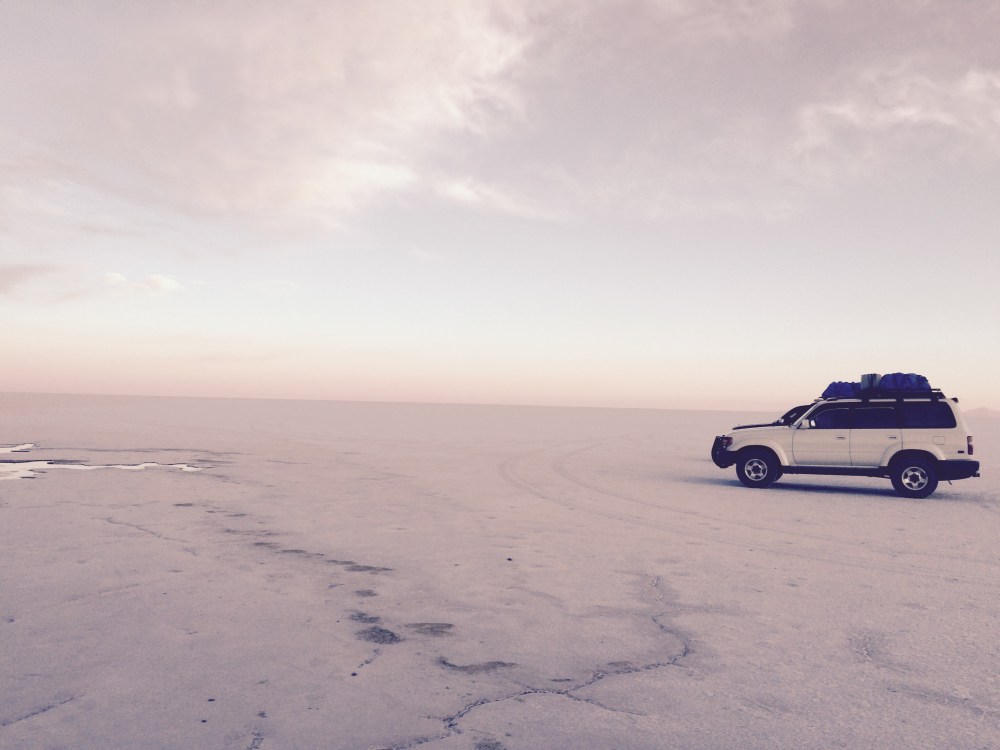
Jeep

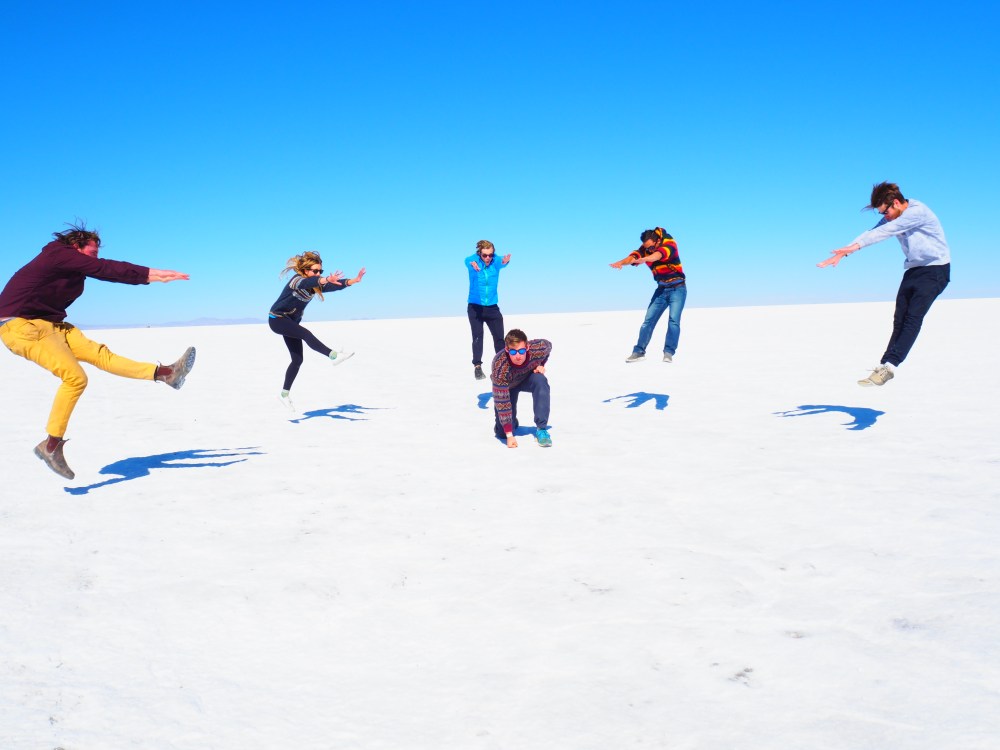
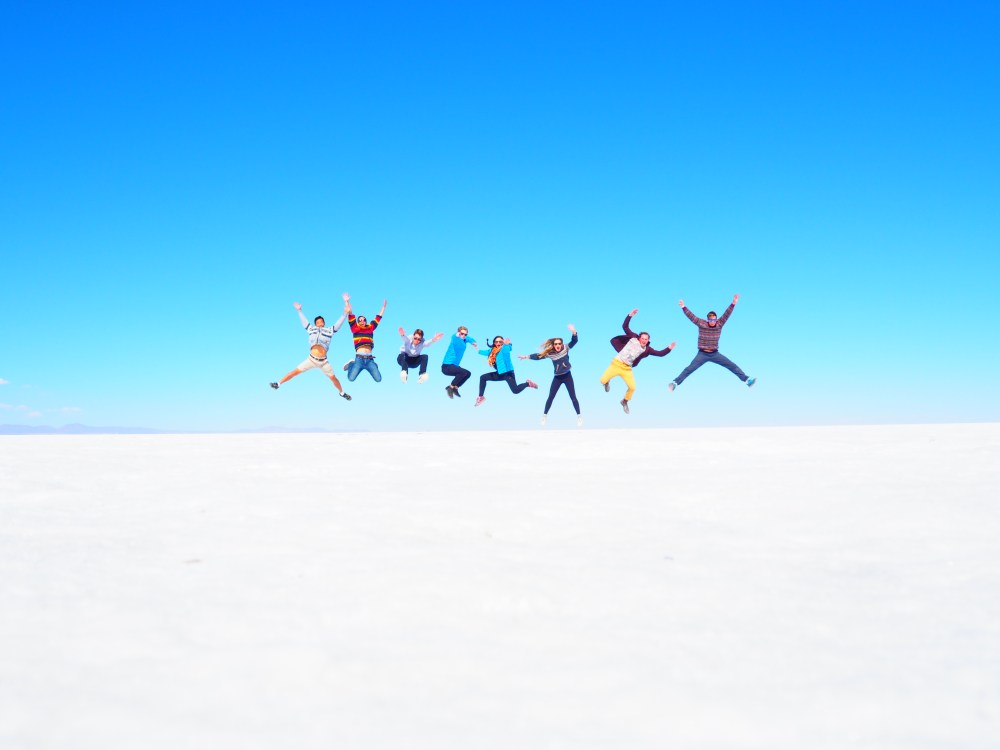
We were driven across the salt flats in a 4×4 jeep accompanied by our English speaking guide and his huge sun visor! We were given a number of opportunities to take perspective photos and we all took advantage of the photo shoot opportunities…

Chris-Force.JPG

Team Jump.JPG

The salt flats are created from a dried up lake and the area covers 4,086 square miles and altitude of 3,656m. The salt appears on the surface in hexagon shaped plates and the salt crystals are mined and refined in the local area.

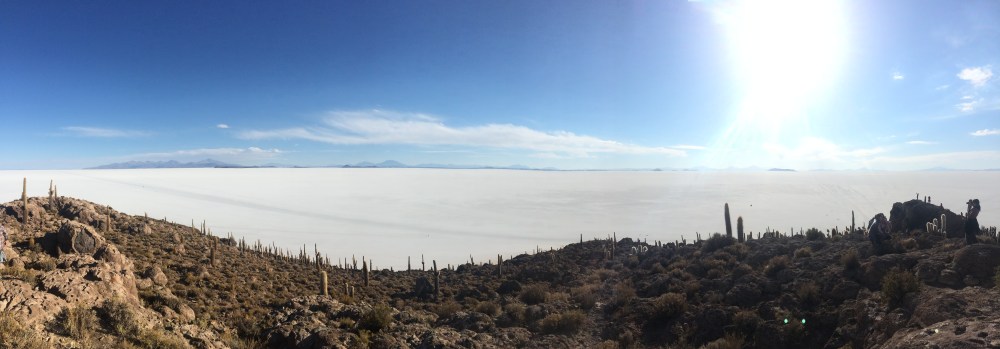
We stopped for lunch in one of the many ‘salt hotels’ which pride themselves in being constructed with mainly bricks made from salt believe it or not! We had more photo opportunities after lunch as well as a hike up the ‘cactus island’, a deposit from the nearby volcano.

cactus island.JPG

As the sun began to set we drove towards the edge of the ‘Lake’ where we found some very shallow water on the surface of the salt. This is where we took the ‘reflection’ photos with great direction from our guide…

The evening was spent in a local salt hotel where we were served delicious food and wine and found our more about Bolivian culture fro our guide. We then took the opportunity to go out on a clear night to look at the stars without any artificial light. The sky was so clear we could see the Milky Way and many shooting stars. Using an app on the Canadian’s phone we were able to identify star correlations and timings of visible comets.

The second day of the tour started with a trek up Tunupa volcano to around 4,200m of the 5,321 m summit.  We were taken into a cave to see mummified bodies which was interesting and slightly disturbing… The trek took us over volcanic rock and up above the salt flats, and we could see the huge expanse of the area. We reached the viewpoint close to the volcano and headed back down for some much earned lunch. Our transport took us back to Uyuni where we started and we caught the overnight bus back to La Paz to stay in our hostel.

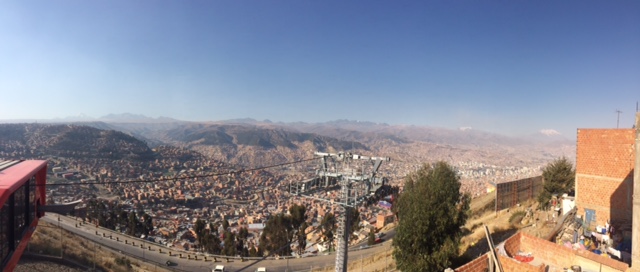
The flowing day we took some time to explore La Paz by taking the ‘Red’ cable car over La Paz to a viewpoint overlooking the city. There are 3 cable cars across the city, which, from what we could gather, are a means of public transport for the locals, as the price is very cheap and allows you to avoid the congested traffic in the city.

La Paz Pano.jpeg

Using the travel agency in our hostel we booked a local bus to Copacabana on the edge of lake Titikaca. The bus journey took around 5 hours and about 3 hours in we had to get off the bus as it crossed the lake in a barge and we travelled in a very small tourist/fishing boat. As there are many hostels in the town, so we waited until we arrived to find somewhere to stay. Unknown to us there was a pretty big religious festival taking place in the area, and there were a number of visitors who had traveled from across Bolivia to worship. We were told that some people had walked from La Paz to Copacabana to worship ( 86 mile journey )!

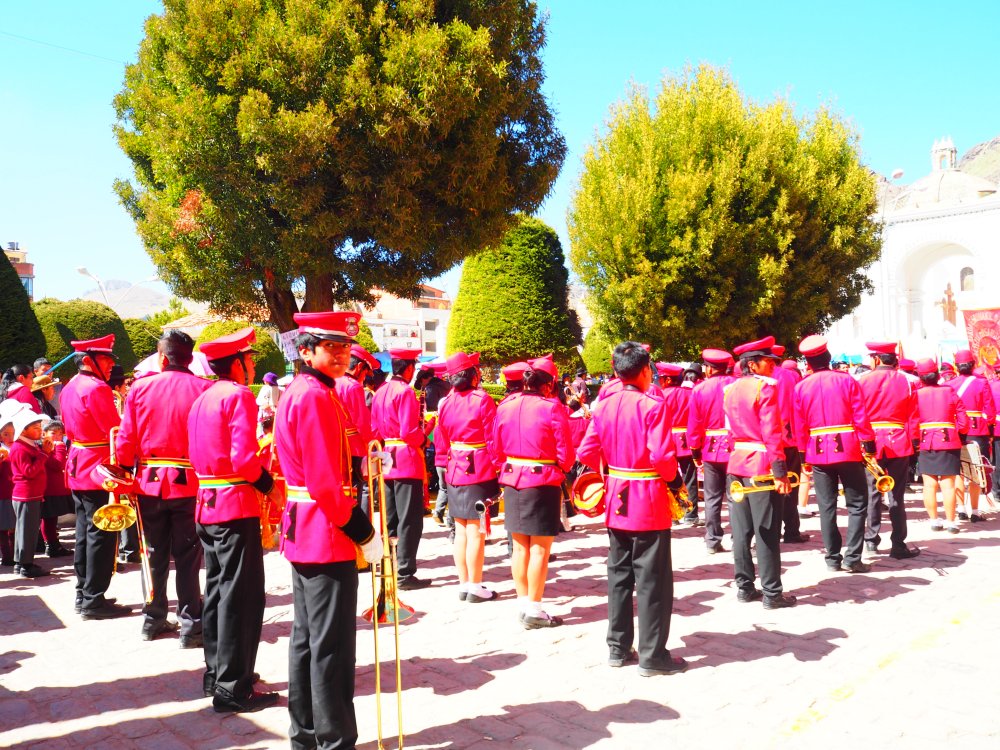
We climbed to the top of Cerro Calvario (Calvary Hill) which is lined with monuments representing the 14 Stations of the Cross. Pilgrims visit the Stations for prayer and penance for sunset and we joined hundreds of people worshiping and giving thanks to Pachamamma (Mother Earth). We enjoyed a beautiful view across the lake as the sunset and people burned incense and poured beer on the ground? Next day the the main square was buzzing, we were lucky enough to see celebrations and entertainment by local marching bands.

School Parade 3.JPG

We are currently making our way south through Argentina and Chile, whilst selecting our very best Olympic pictures from the thousands taken over 10 events. Brazil blog is on its way, we promise! Speak soon,

Hayley and Chris

200m- Us.JPG


Cusco and the Inca Trail to Machu Picchu

Cusco and the Inca Trail to Machu Picchu

Cusco is a beautiful city set in the Andies at an altitude of 3500m which we felt quickly upon arrival. There are a number of reasons to travel to Cusco and we chose to acclimatise in the city for 4 days before starting the Inca Trail.
We had some amazing food and drink in Cusco and were able to catch up with a friend from uni as well as explore the Sacred Valley. We took a free walking tour to find our way round the city and learn more about the multicultural history of Cusco. With so many influences including; Arabic, Spanish, French and the Native Incas, the city’s architecture is varied and has a part to play in Cusco’s story.
I think that it is now time that we give a shout out to our amazing Travel Agent Jeanette at STA Aberdeen who has organised our tours for us including Galapagos and The Inca Trail! We did the Inca Trail through Bamba Experience and this is an extremely popular tour selling out 6 months in advance! We had a briefing 24 hours before our trip, detailing our route and equipment needed for the trek which would be 4 days and 3 nights.
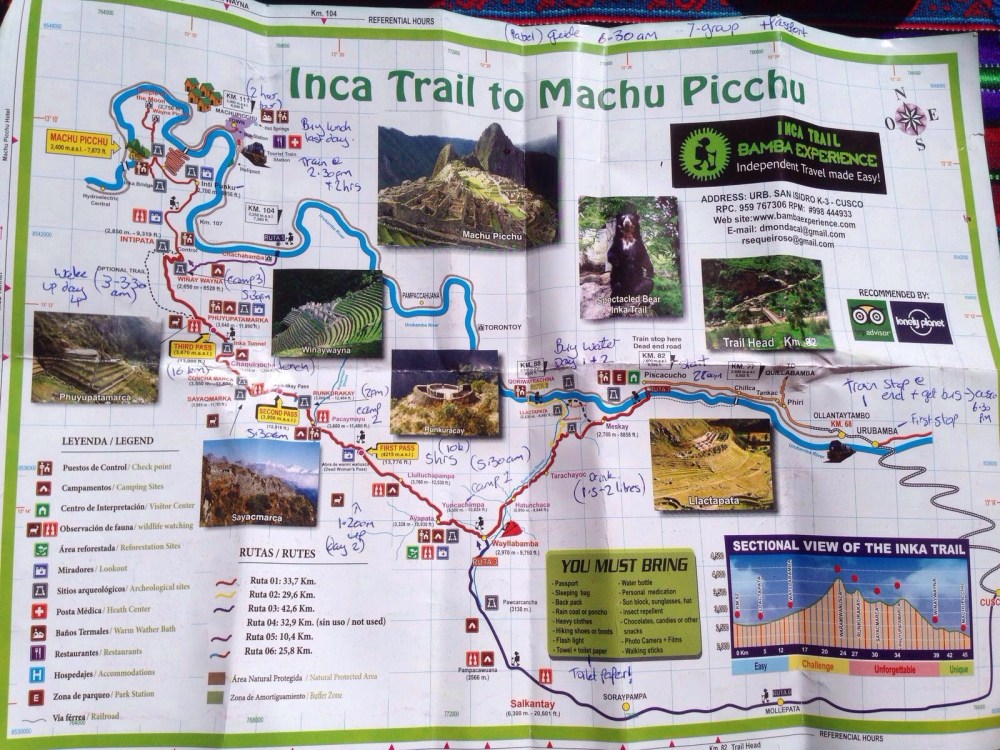
Inca Map

Day 1: An early morning meet at 6am to get the bus to Ollantaytambo where we met the rest of our group and had breakfast. From there we were transported to Kilometre 82, our starting point for the trek and final checks were made along with sleeping bags and mats secured onto our bags.

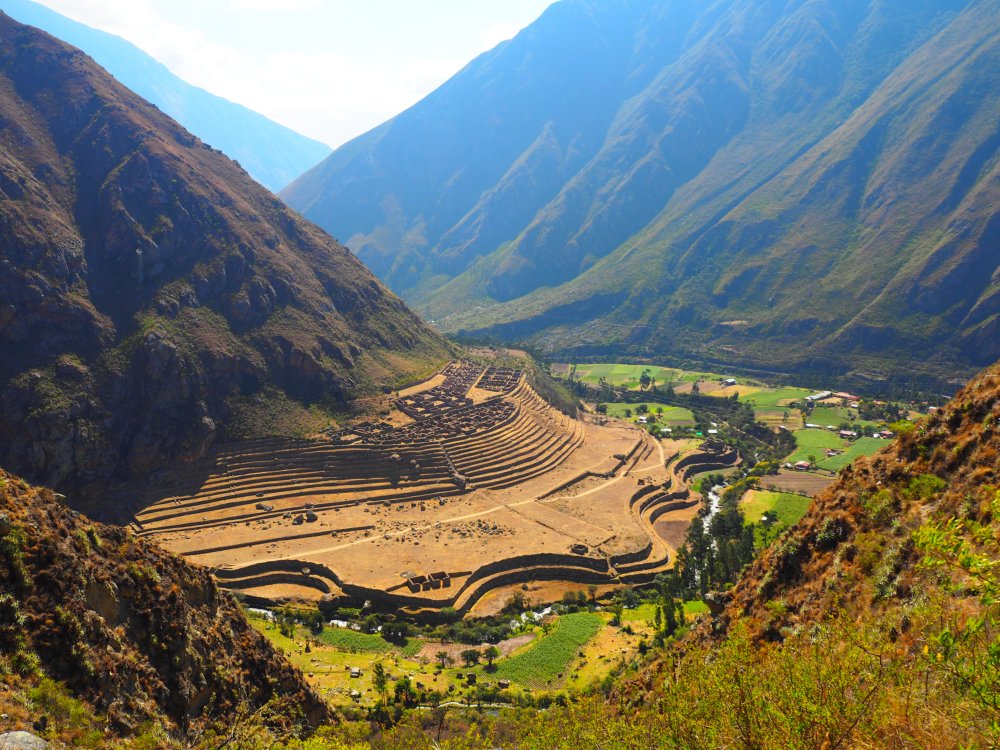
The start of the trek was relatively flat and took us alongside the Urubamba River for 10km. On the walk we passed the famous Incan ruin of Llacpapata, used as a food store and collection of taxes for produce. We climbed 700m to our first campsite at Yuncachimpa where we arrived to tea and popcorn followed by a delicious dinner.

OLYMPUS DIGITAL CAMERA

OLYMPUS DIGITAL CAMERA

Day 2: Early rise at 5am for our toughest day of trekking on the trail. We walked for 4 hours climbing 900m to reach the “Dead Woman’s Pass” at 4215m and it was safe to say the air was thinner up there!

After a break and some photos at the top of the pass we carried on down through the trail to campsite number 2, at Pacaymayu at 3600m. We arrived at the camp at 1.30pm before another delicious lunch at 2pm, and the best part of he day, an afternoon nap! Woken up at 5.30 pm for tea and popcorn again was a treat, and provided with another 3 course meal for dinner! That night there were very little clouds and we could see the stars and the Milky-way clearly.

Day 3: Best news after 5am wake up was Cake for breakfast! The cook had prepared a cake and iced it for breakfast that morning followed by pancakes and syrup ! We did not think that the food could get any better…. But it was a piece of cake for the guys on our team!

This was our longest day of hiking on the trail, 16 km and total drop of 1000m in altitude. The start of the day included a 400m climb up to Rukurakay Pass at 4000m, ruins of an Incan storage building used for preserving foods in the mountain. This was then followed by a 400m descent to Sayacmarca an old Incan resting place for pilgrims travelling to Machu Picchu.

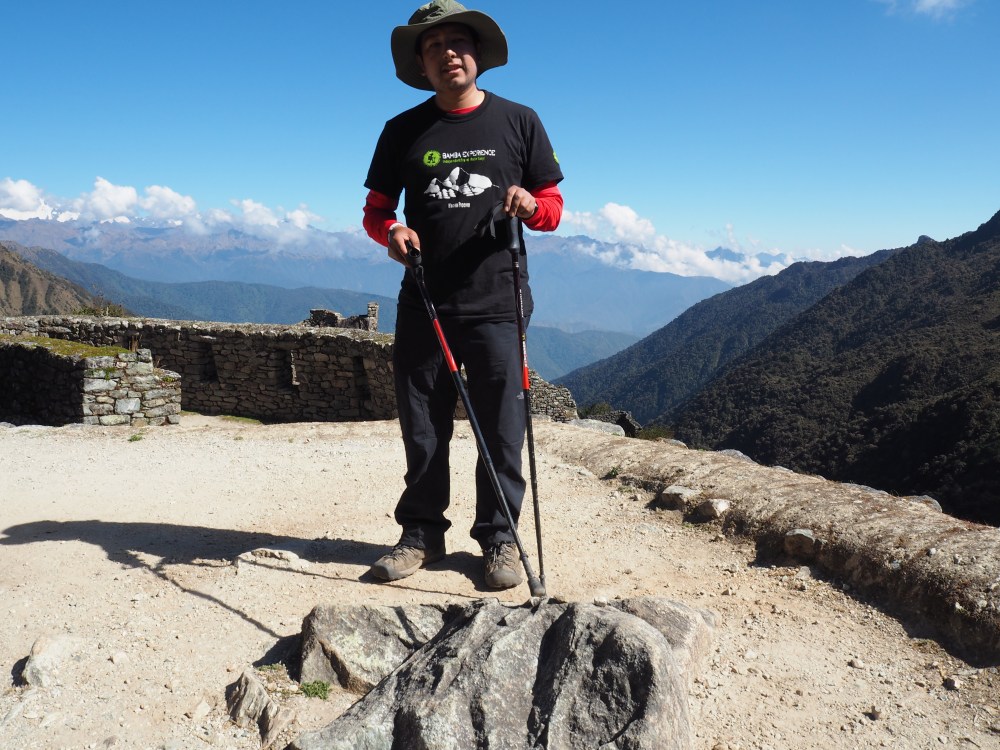
It was at this point our guide Pabel informed us of the physiological difference between westerners and the Incas which allowed them to travel through this environment efficiently. The Incas and native people to the mountain have a deeper chest cavity, allowing them to take in more oxygen per breath.

OLYMPUS DIGITAL CAMERA

Pabel

From there on the trail followed the original Inca trail on the stones payed by the Incas, passing through beautiful landscape and under a canopy of native trees.

We descended 1000m passing Winaywayna, huge Inca terraces used for creating hybrid crops, experimental farming and bringing on crops in concentrated terraces. The crops were then moved to produce food for residents of Machu Picchu. Our campsite was at the bottom of the ruin at 2650m our lowest camp of the trail.

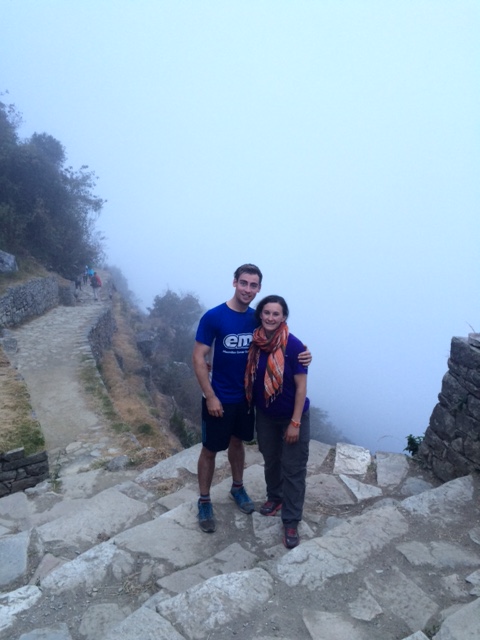
Day 4: Rain overnight made the 3am rise a little challenging, as we packed up for our final day. We joined the rest of the 250 trekkers at the check point at 4am (3rd group in the que) and waited for the check point to open at 5.30am. We walked for one hour along the edge of the mountain side to reach Inti Punku otherwise known as the “Sungate”. We were really looking forward to being the first ones up to the Sungate before any tourists set foot on Machu Picchu for the day and getting the “postcard” photograph…..Us-Sungate

After the “stunning” view from the Sungate we headed closer to Machu Picchu as the cloud started to clear and the sun burned through. We were able to explore the magnificent ruins and our guide gave us a tour of the Temple of the Moon and the traditional buildings.

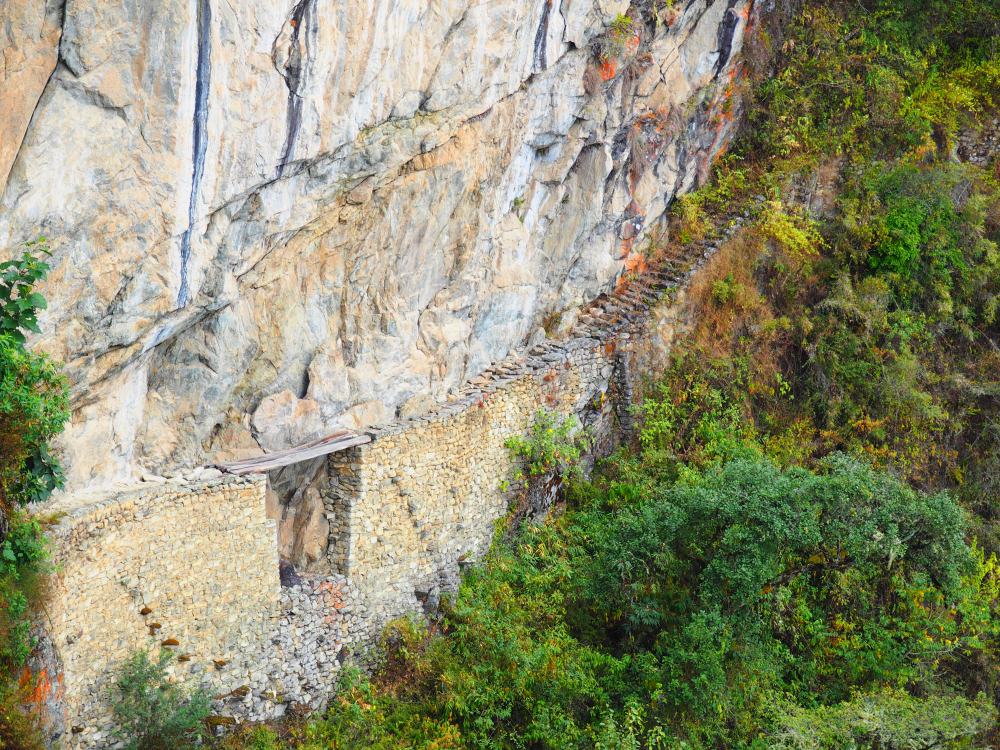
We took a walk to see the Inca Bridge used by the Incas to escape to the jungle. You can see where they remove their planks so that the enemy could not follow them…MP-Inca Bridge.JPG
Our day was finished off with an incredible train ride through the Sacred Valley on an Inca Rail train from ……. To our starting point at Ollantaytambo, where we hopped on a bus back to Cusco.
A truly magnificent trip, which was WELL worth saving up for and the experience was made by the hard work and commitment from the Bamba team. Our guide Pabel, the porters who carried tents and equipment at 25-30kg each and the cook! Also the porters ranged from age 17-80 years old and ran past us to pitch tents and get the camp ready for our arrival. They were truly the reason that the trip was such a success and they deserve all of the credit they can get.

We will have another blog update after the Olympics, speak soon !

Hayley and Chris.

Galapagos Islands

Day 1-Hotel View

We promised you all Galápagos Island hopping tour blog…so here it’s!

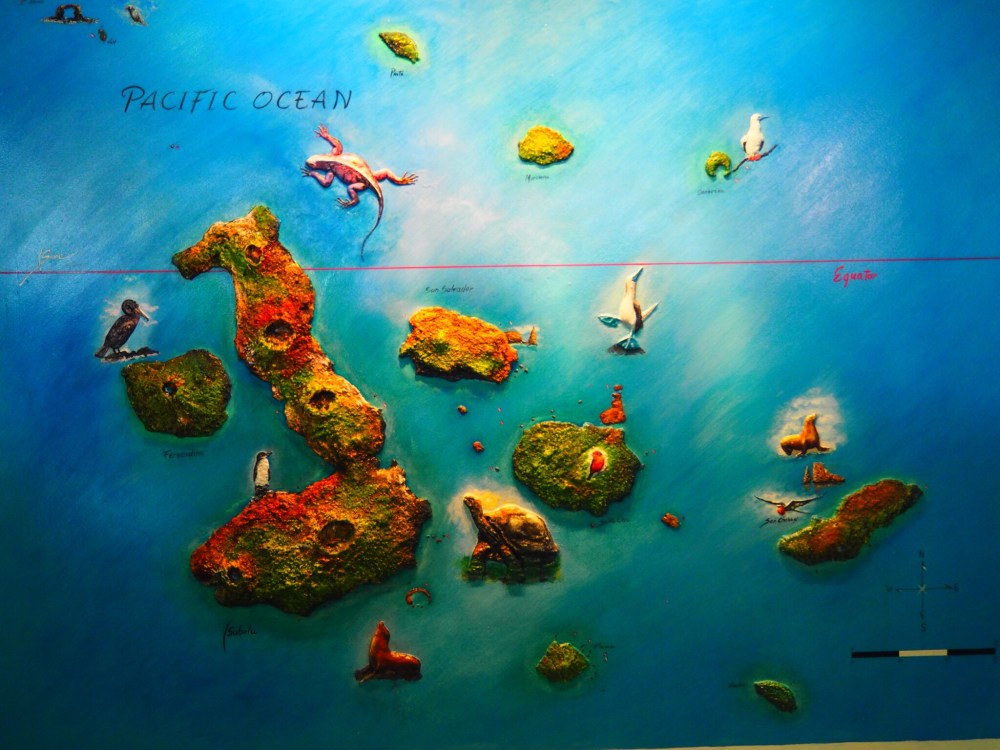
Our tour ran by G Adventures, took us from Quito in Ecuador to explore 3 volcanic islands and the Galápagos wildlife. At 4am on the 13th, 16 of us left Quito and we were in for a amazing tour…

Day 1-Santa Cruz 3

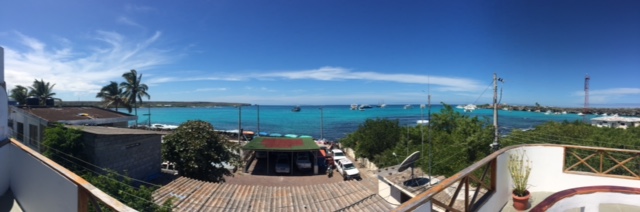
First stop was the island of Baltra where we were transferred by bus then water taxi across to the Island of Santa Cruz. Our accommodation was on the sea front with incredible views, weather was equally as stunning! Lunch was a 5 dollar treat, including soup, main meal and drink all made with fresh local ingredients! After a wonder round the island and a briefing for day 2 we headed to the local streets for some exquisite food! Steamed fresh fish on the BBQ with the most incredible coconut sauce, washed down by the local brew, we were becoming huge fans of the Galapagos very quickly!

Day 2took us on a trip up to the ‘Highlands’ of Santa Cruz (not quite like the Highlands of Scotland) to see the famous Giant Tortoise in the wild. We were able to get very close to the tortoises as well as walk through lava tunnels underground.

Day 3 began with an early start for a speedboat trip across to Floreana Island where the local population is around 150. We had 2 nights on the island, staying in local accommodation and eating in all 3 of the island’s restaurants! The food on Folreana was outstanding; octopus, fresh fruit juices, banana chips (in place of croutons in our soup) and craft beer.

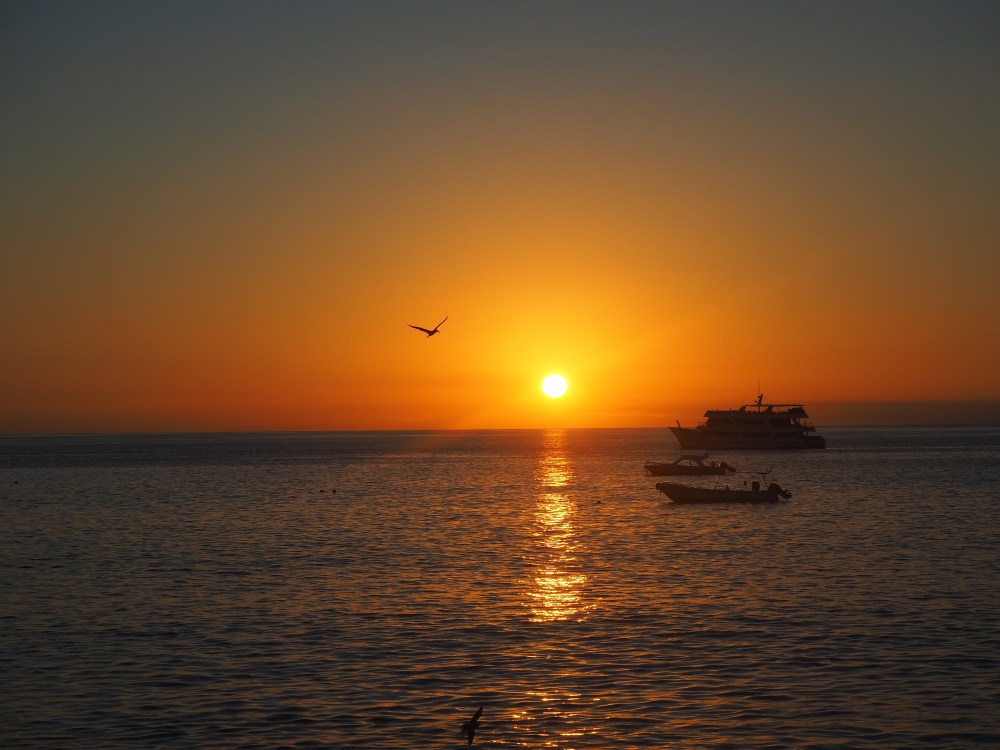
OLYMPUS DIGITAL CAMERA

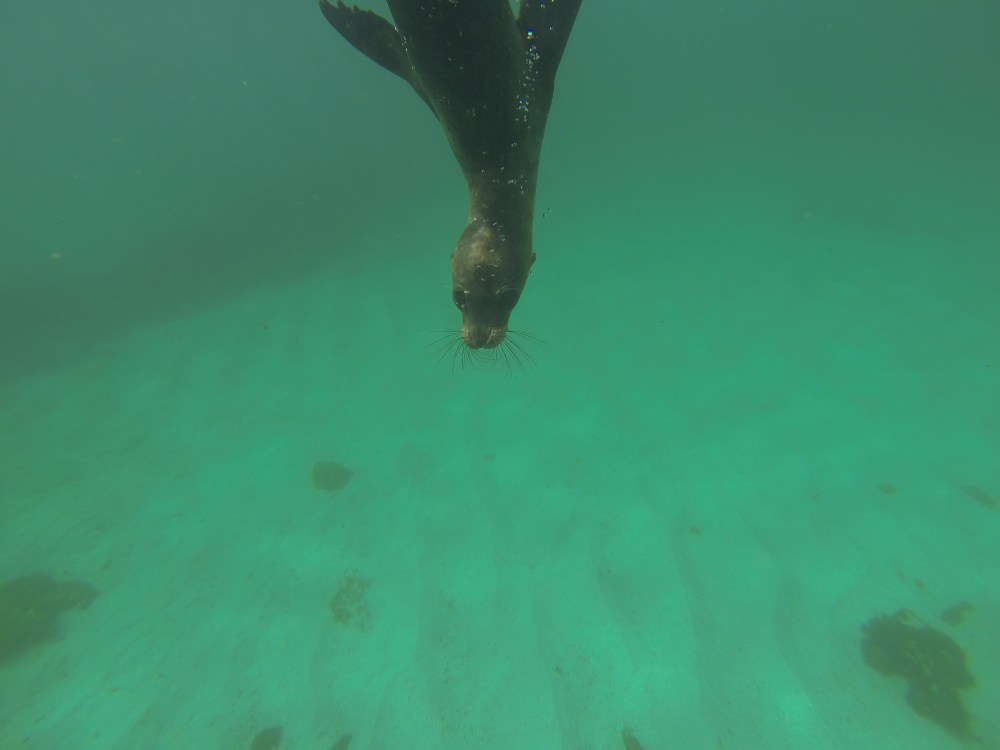
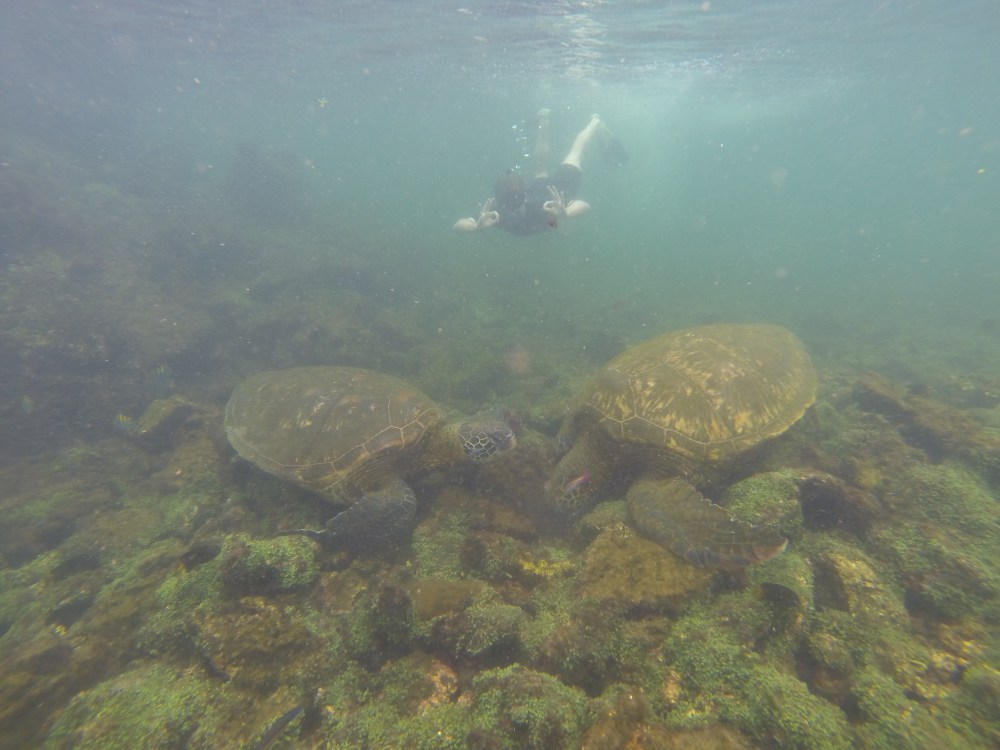
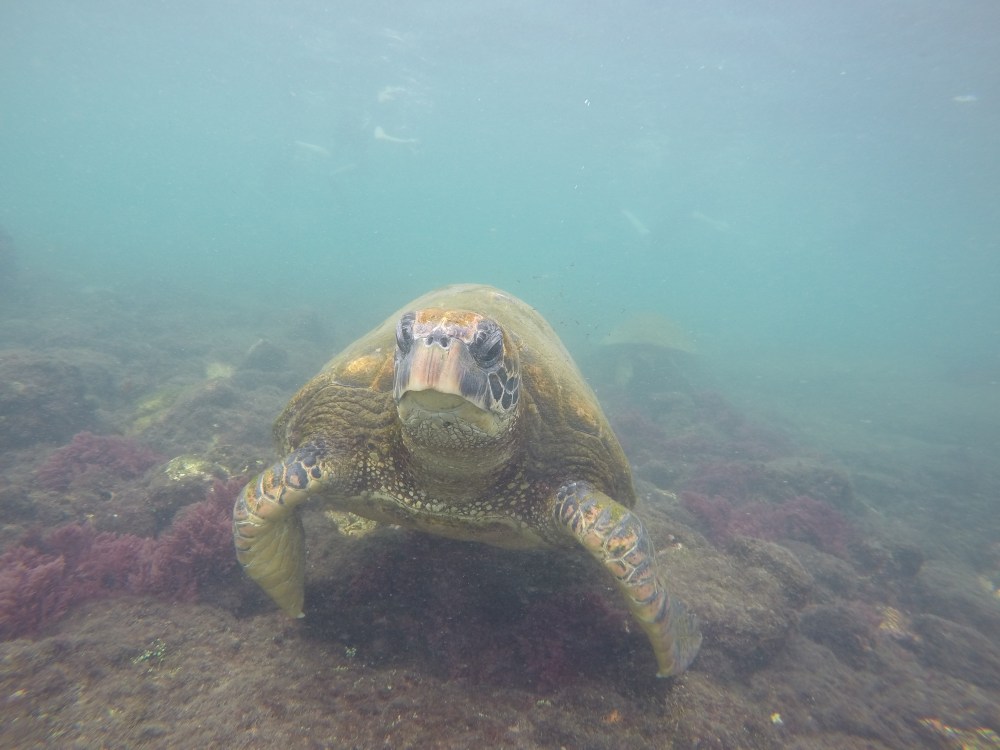
Day 4 we had our first experience of snorkelling with the unique wildlife; our first snorkelling dive let us see a baby sea lion, sea turtles, crabs, sharks and pelican birds diving for fish.

DCIM100GOPRO

Baby Sea Lion

DCIM100GOPRO

Chris and sea tutrtles 

Day 5 on the speed boat again for another 2 hour trip to our 3rd island; Isabella… Little did we know that we would be in for a huge treat on route!!!
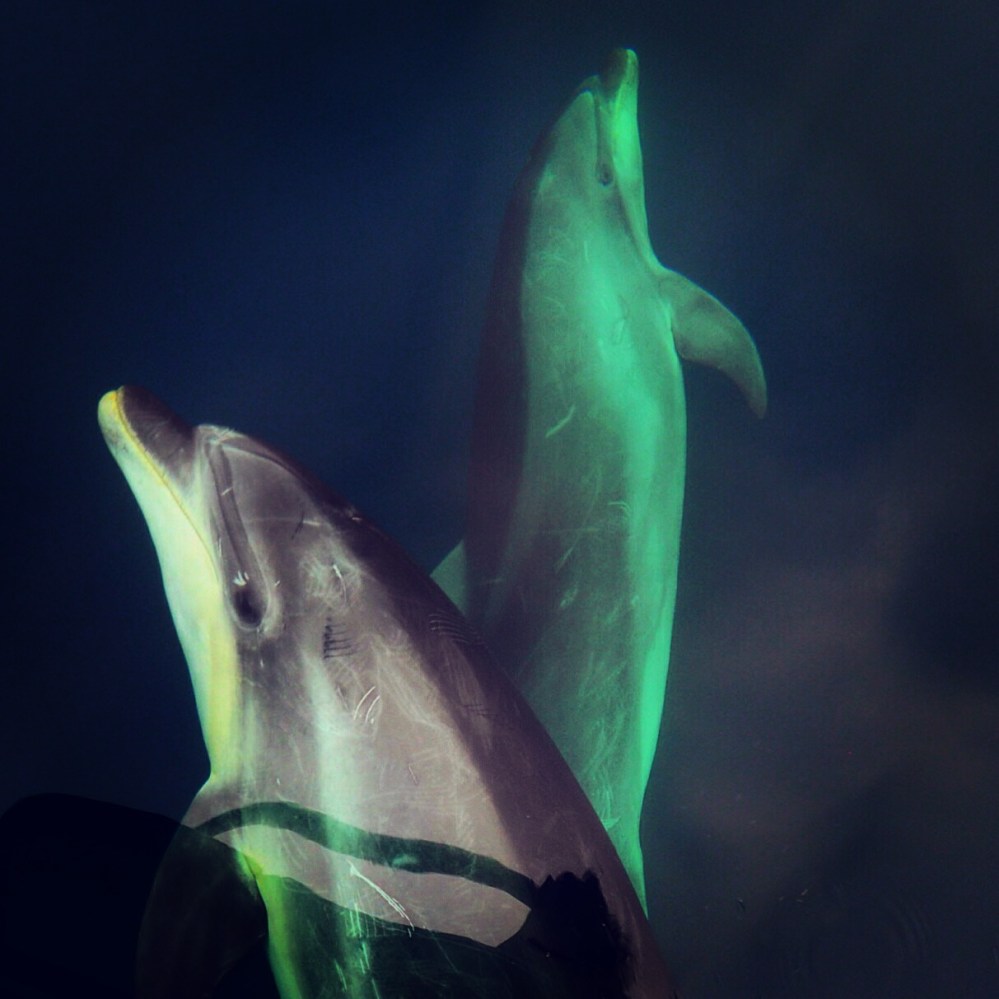
DOLPHINS! In the wild, in the Galápagos! This was not part of our tour, but the captain of our boat spotted them, and slowed down for the dolphin pod to play with the boat, jumping out of the water and swimming alongside the front of the boat. This has to be one of the highlights, first time seeing Dolphins, in their natural environment and hearing them communicate to each other.

Day 5 continued to impress, as we climbed up the volcano known as Sierra Negra (1370m). This volcano was active 10 years ago and Isabella Island is made up of a series of volcanos. The caldera is 10k in diameter, not sure that our photos do the expanse of the area justice!

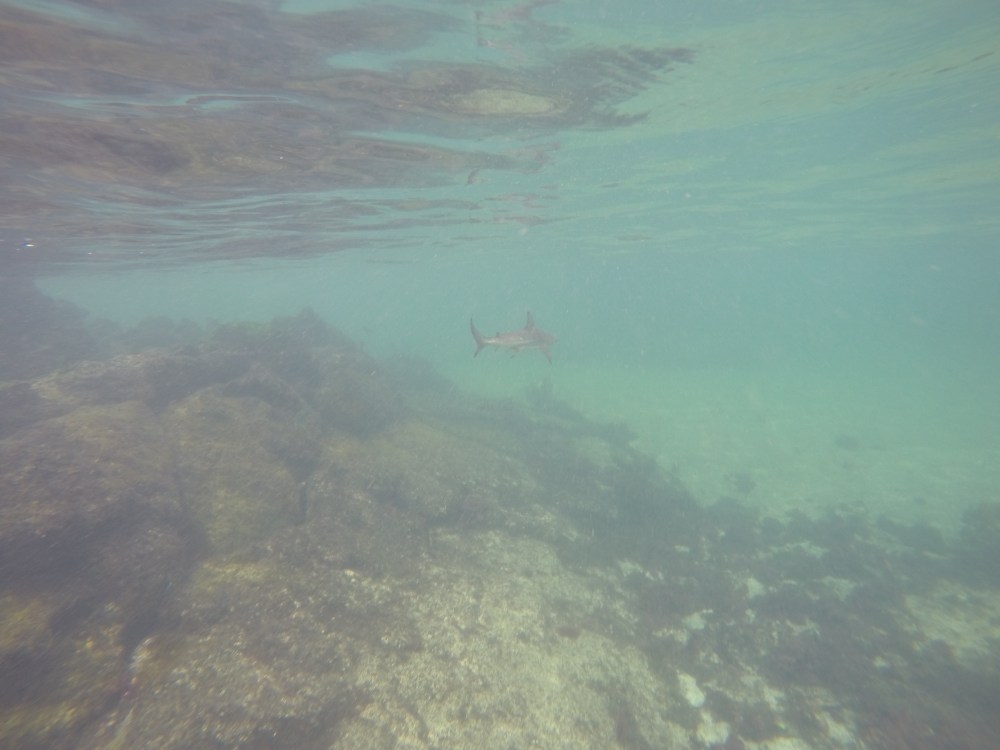
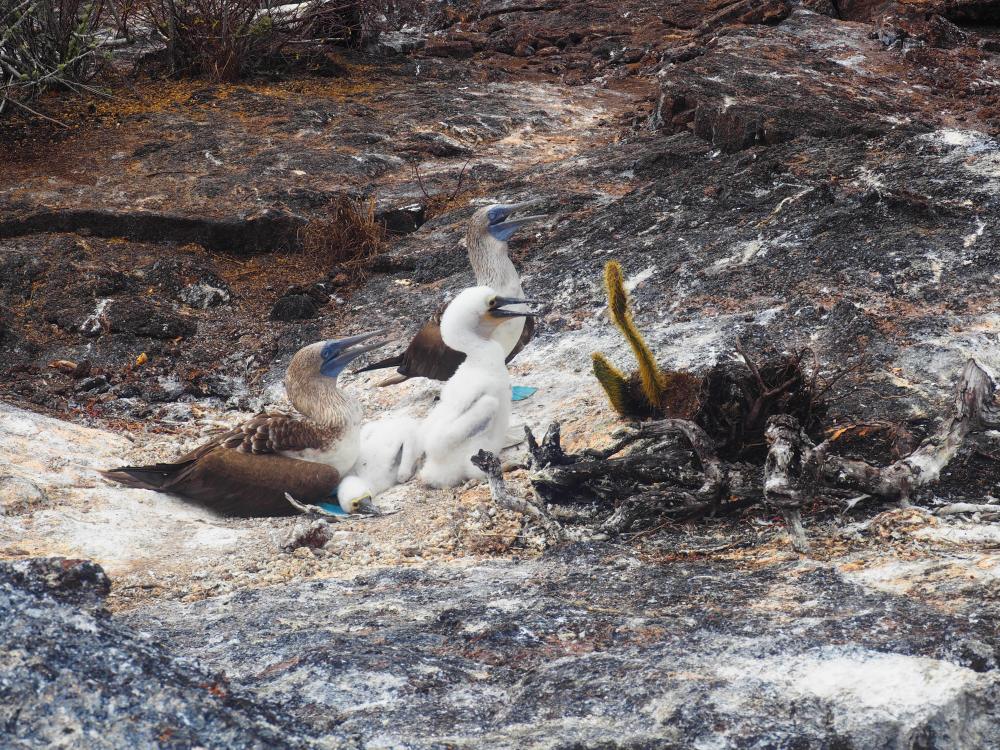
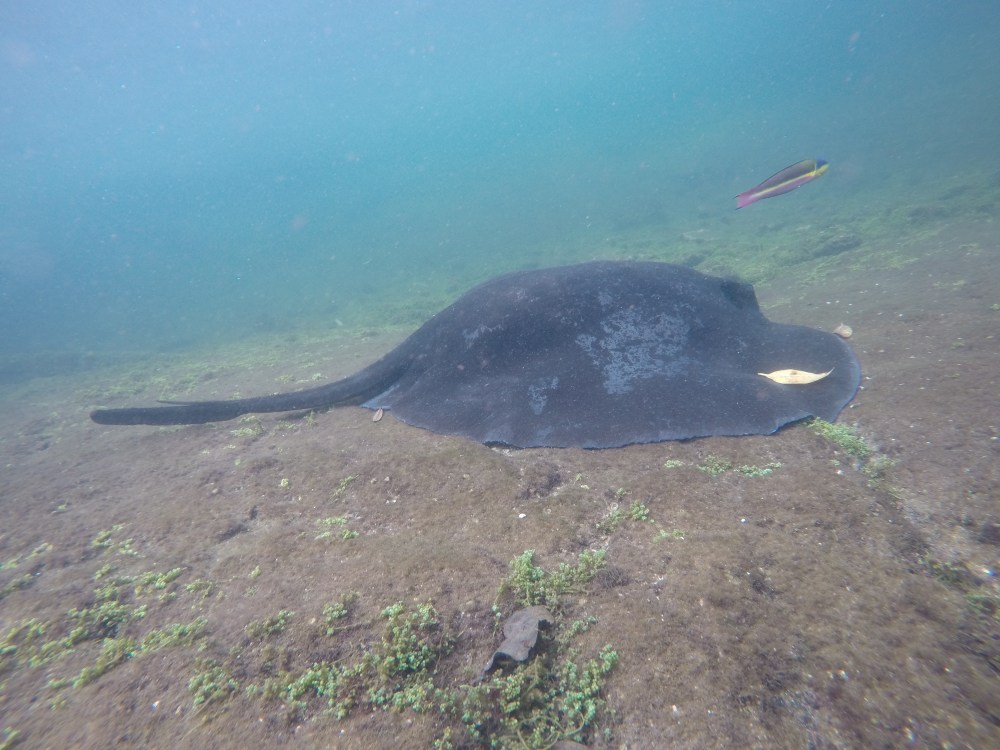
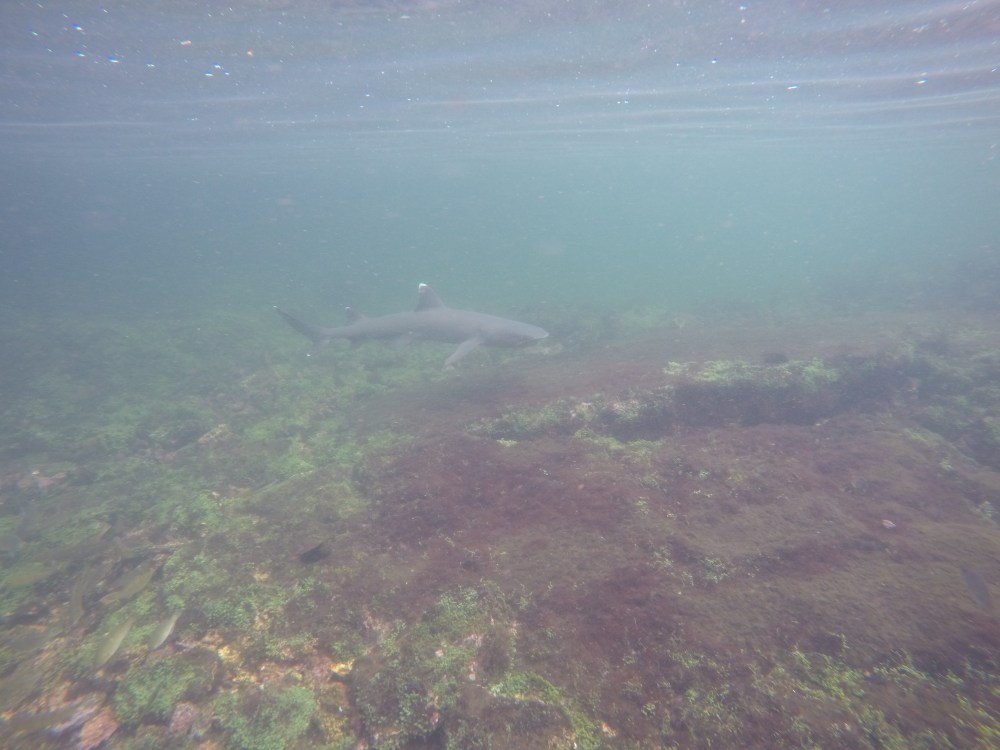
Day 6 we opted for an optional tour to the lava tunnels and snorkelling in the bays. This trip we were provided with wet suits as we were in the water for over 45minutes looking out for; seahorses, white tip sharks, sea turtles, Galápagos Sharks, puffer fish, sting rays and sea lions (the tour did not disappoint we saw all of the above!) second part of the tour took us on foot to walk across the lava bridges to see Blue Footed Boobies both incubating their eggs and feeding young chicks. We learned that the parents pick one chick if there are 2 to feed and help thrive, whilst the other will perish as they cannot provide enough food. On the third and final part of the day we were lucky enough to see the huge Manta Rays as they swam lifting their fins out of the water.

DCIM100GOPROGOPR1007.

Sea Turtle

DCIM100GOPROGOPR0975.

Galapagos Shark

OLYMPUS DIGITAL CAMERA

Nesting Blue Footed Boobies

DCIM100GOPROGOPR0911.

Sting-ray 

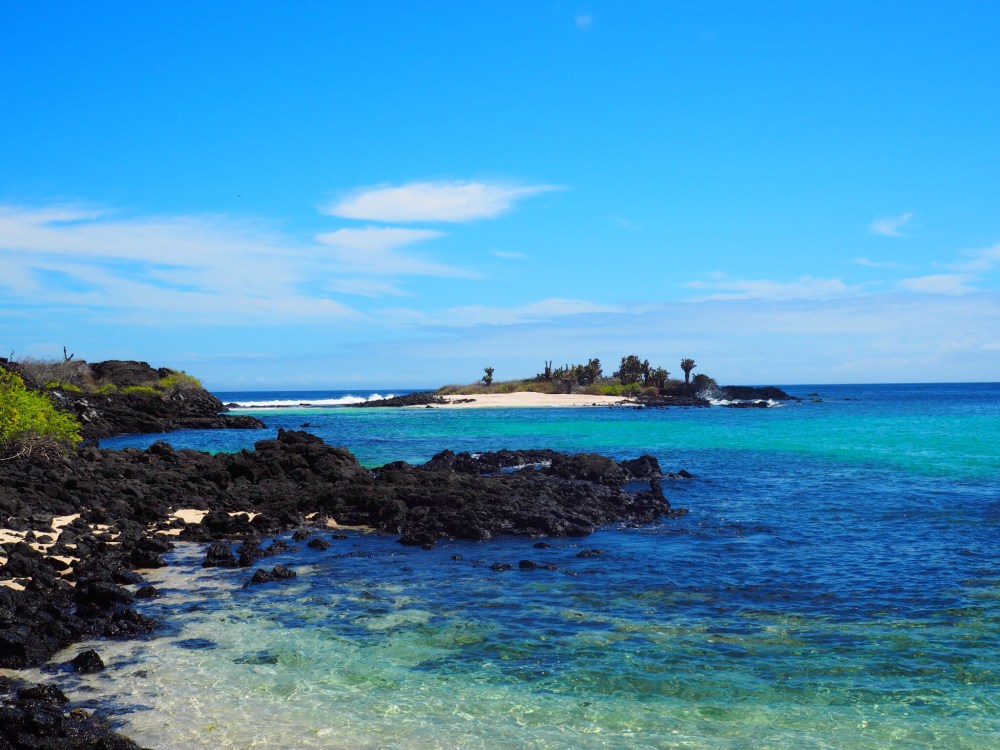
On our last full day in the Galápagos we travelled back to Santa Cruz and the option to visit other parts of the island. We decided to take the walk out to Tortuga Bay, a sheltered and well hidden white sandy beach. We ate our picnic alongside some hungry finches, and then hired a sea kayak to explore the bay. Again we saw a variety of fish and sea turtles as well as experiencing our first rain shower since leaving Scotland (slightly different with warm rain and swim wear on!)

We were also lucky to have had a great group of people to enjoy the trip with and will remember this tour for a very long time!

DCIM100GOPROGOPR0880.

Another turtle…

This has been a challenge to pick photos as we have hundreds, but we have tried to include the best…hope you all enjoy them as much as we did taking them!

DCIM100GOPROGOPR0932.

White Tipped Shark

Speak soon,

Chris and Hayley

OLYMPUS DIGITAL CAMERA

ChasingtheSunEast…

Day 1- Bogota

P7090047.jpg

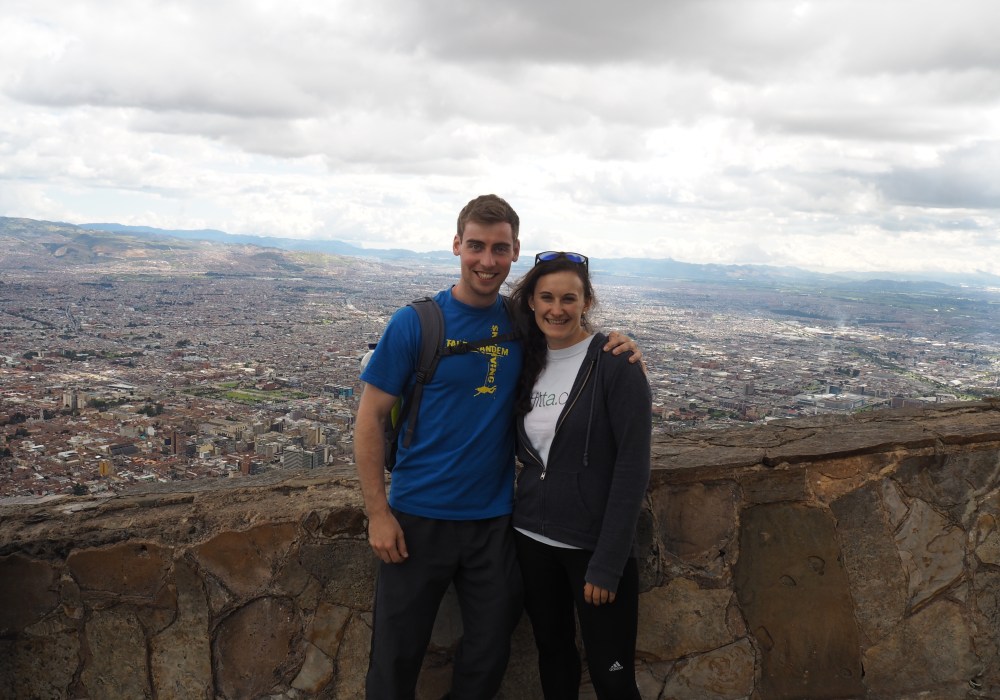
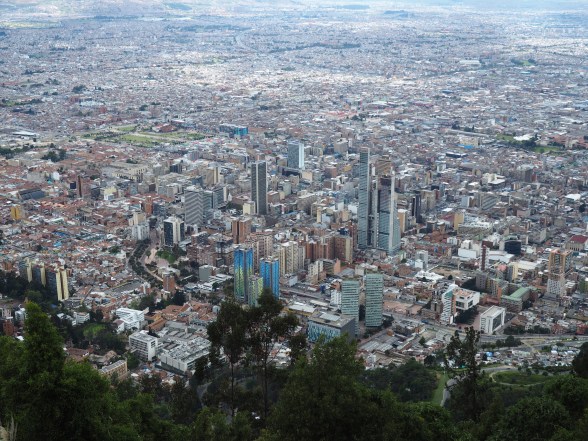
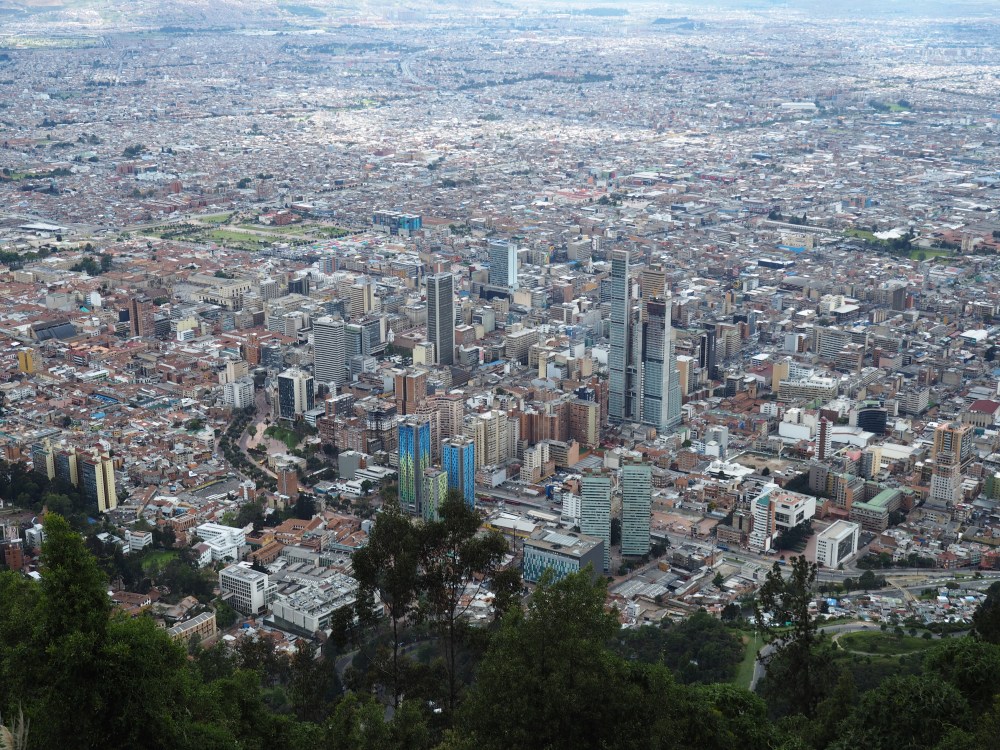
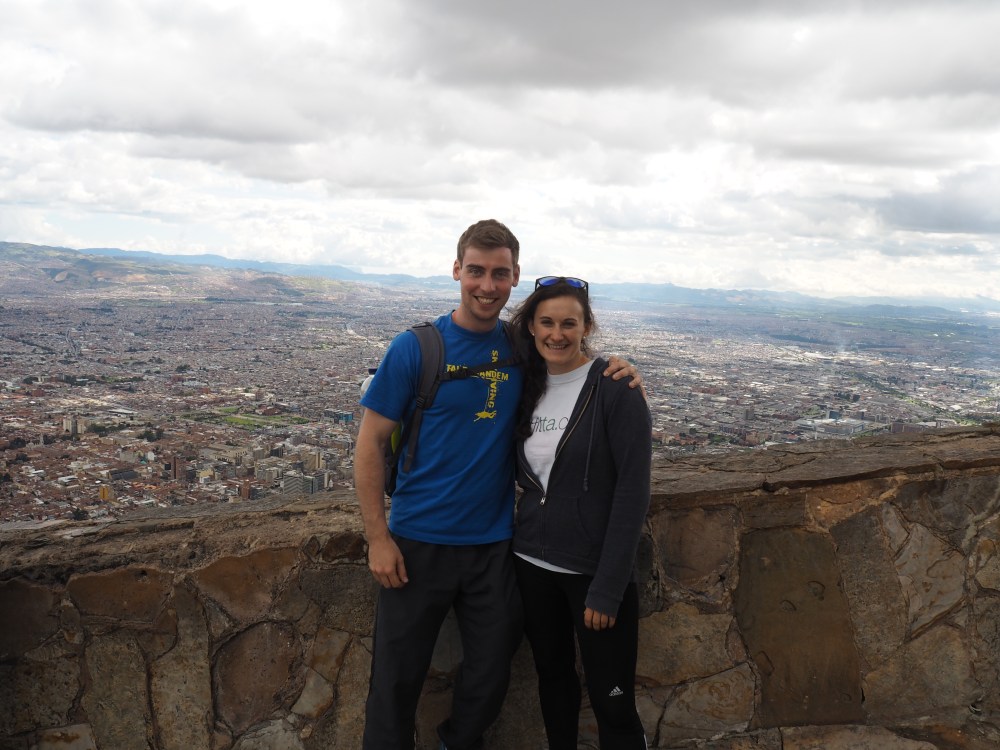
View over Bogota from Monserrate

We have spent the day exploring Bogota and learning about the history of the city. Our Hostel Casa Bellavista is situated off of the well known ‘Plaza del Chorro de Quevedo’ and is on the most narrow street in Bogota!

P7090140.jpg

Plaza del Chorro de Quevedo

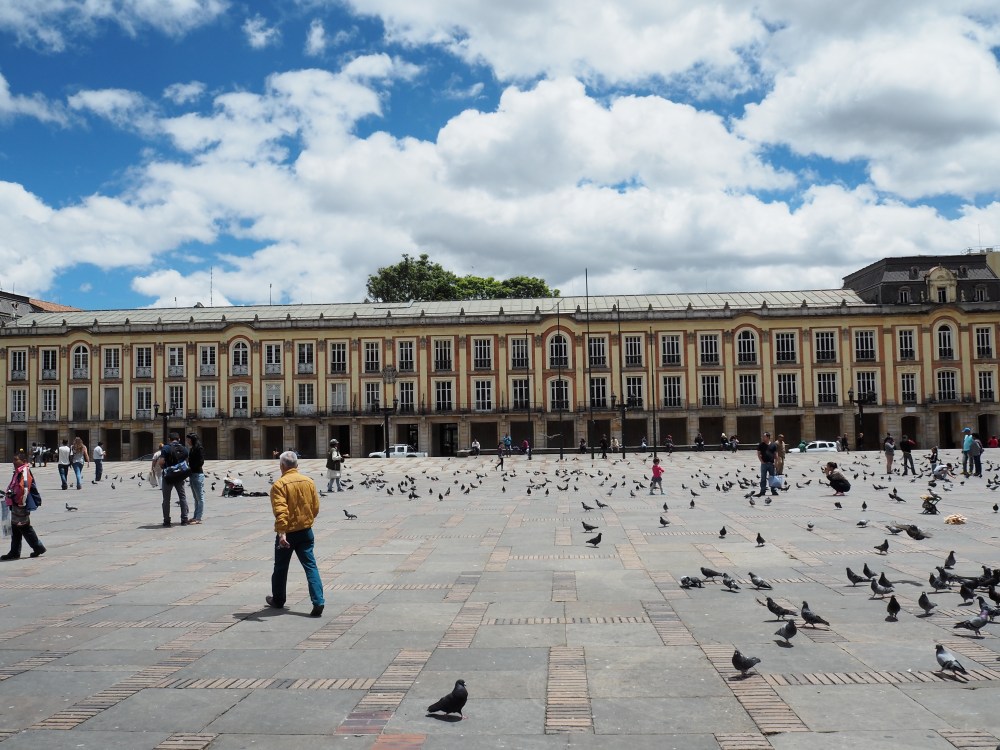
Our first trip this morning was a free tour of the city following the history and development of the area of Bogota. Our guide took us through the streets and past buildings of historic importance and to the president’s house.

OLYMPUS DIGITAL CAMERA

President’s grounds

OLYMPUS DIGITAL CAMERA

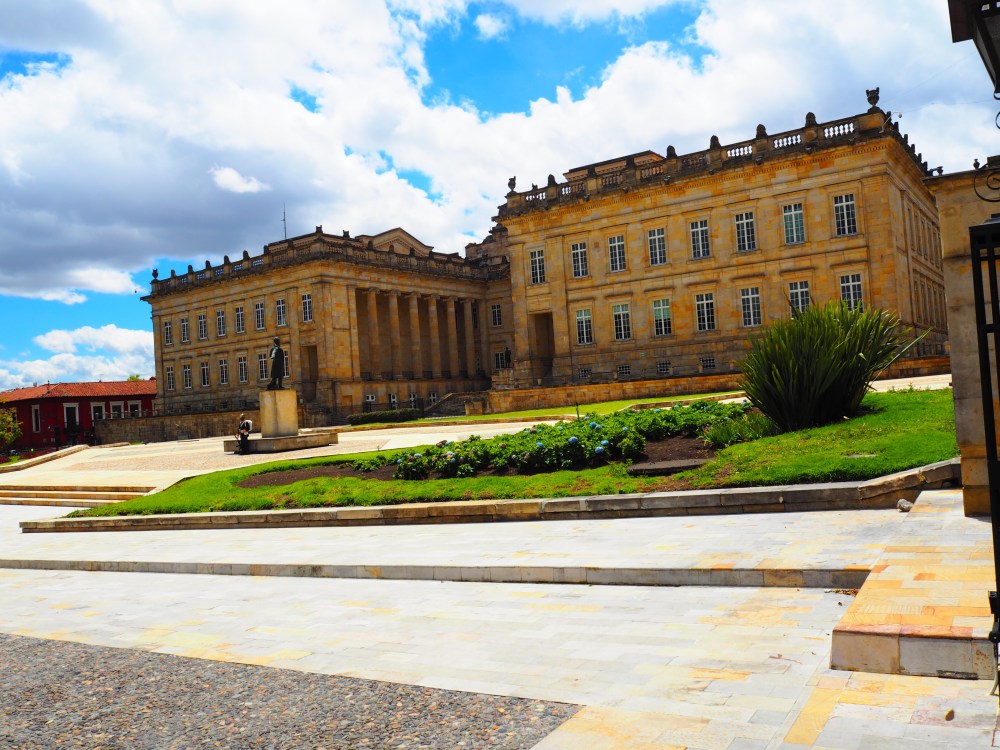
French inspired building in the square

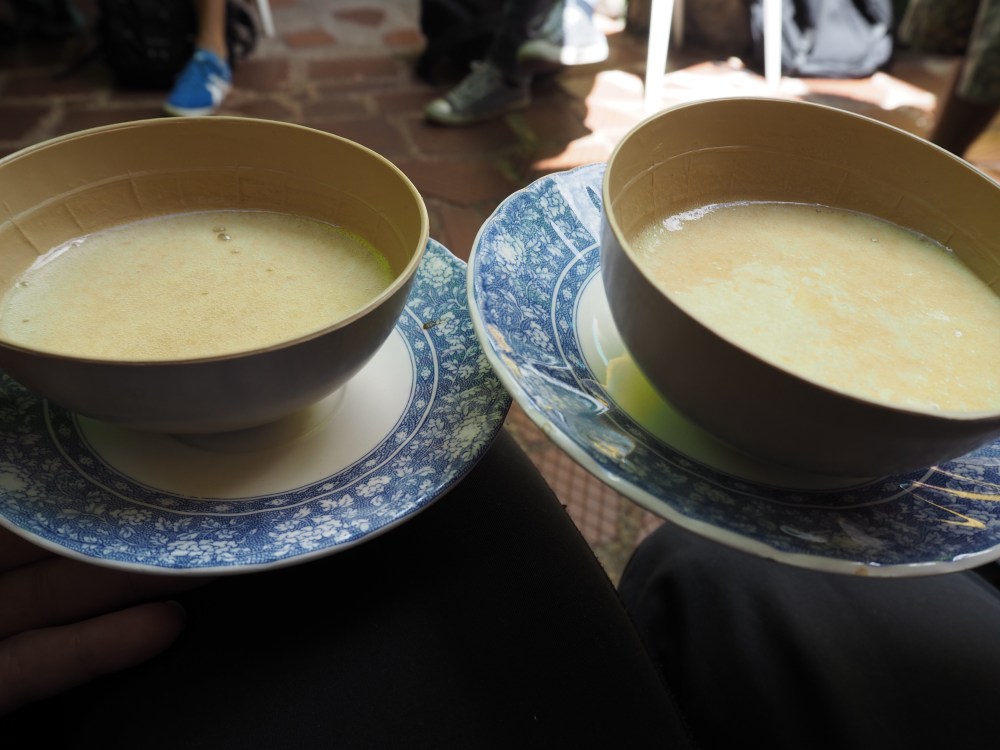
We got to try the local drink called ‘Chicha’ made from fermented corn, quite tasty!

OLYMPUS DIGITAL CAMERA

Chicha

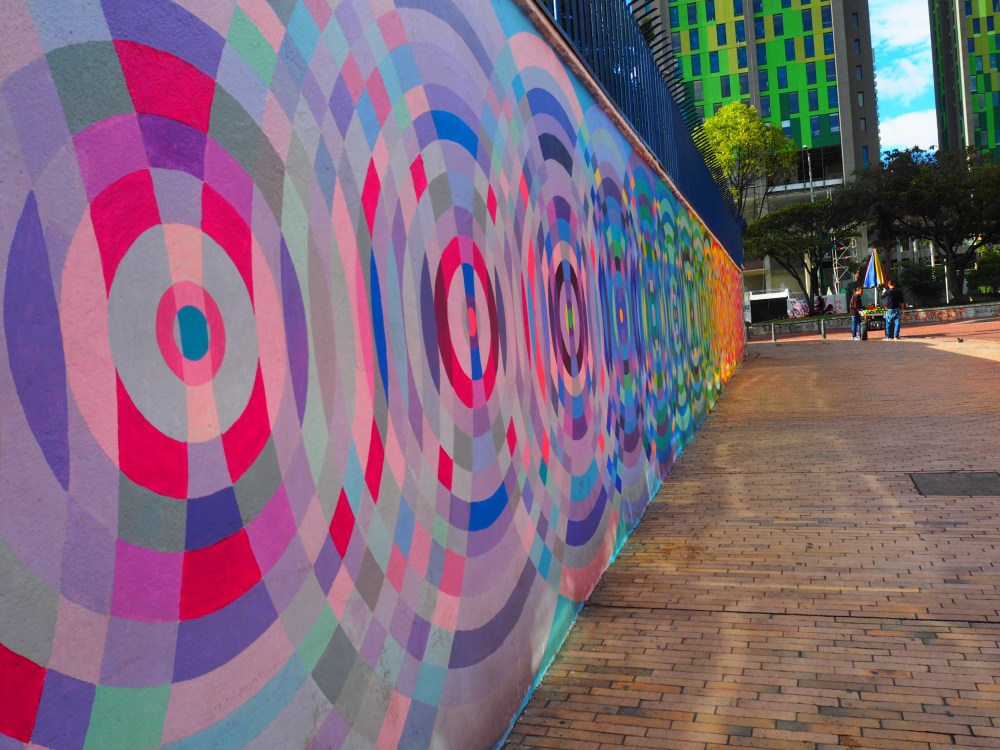
Our tour took us past some of the famous graffiti across Bogota…

P7090105.jpg

After some lunch we took the cable car up to the top of the city to Montserrate.

OLYMPUS DIGITAL CAMERA

View over Bogota

OLYMPUS DIGITAL CAMERA

3000m above sea level

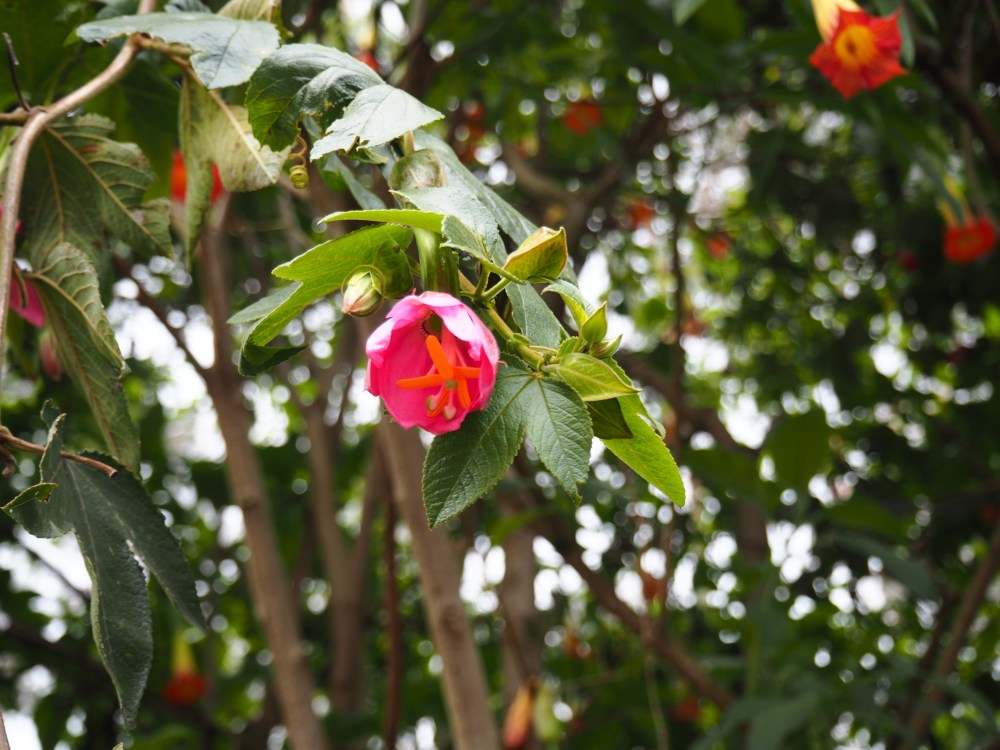
We also took a walk around the gardens up at the top of the Monserrate

OLYMPUS DIGITAL CAMERA


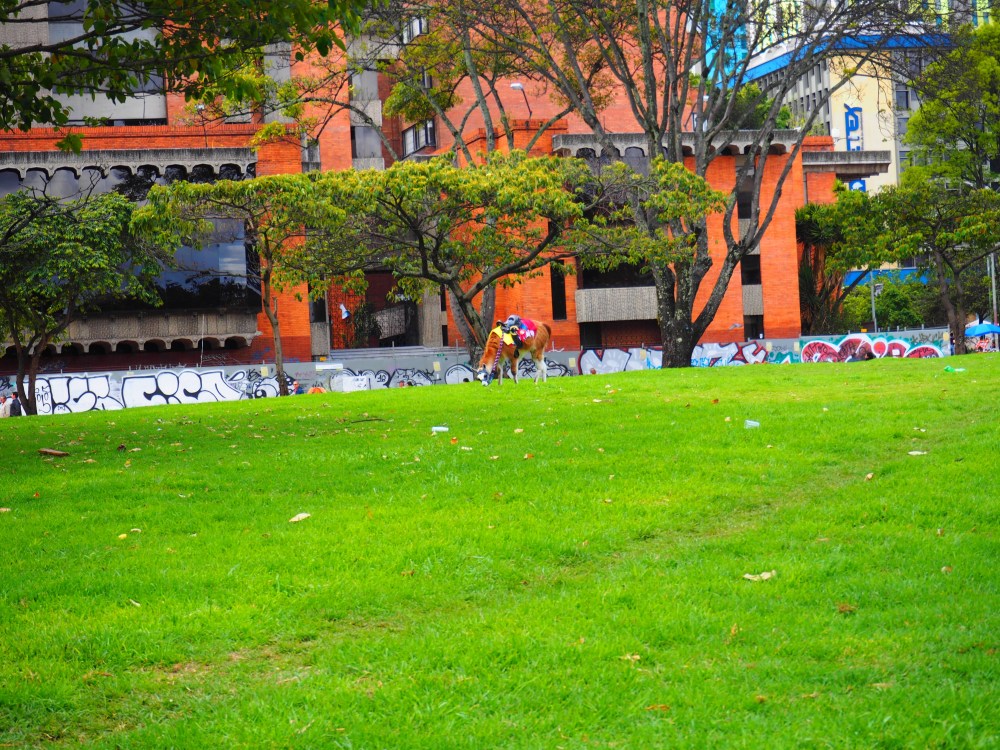
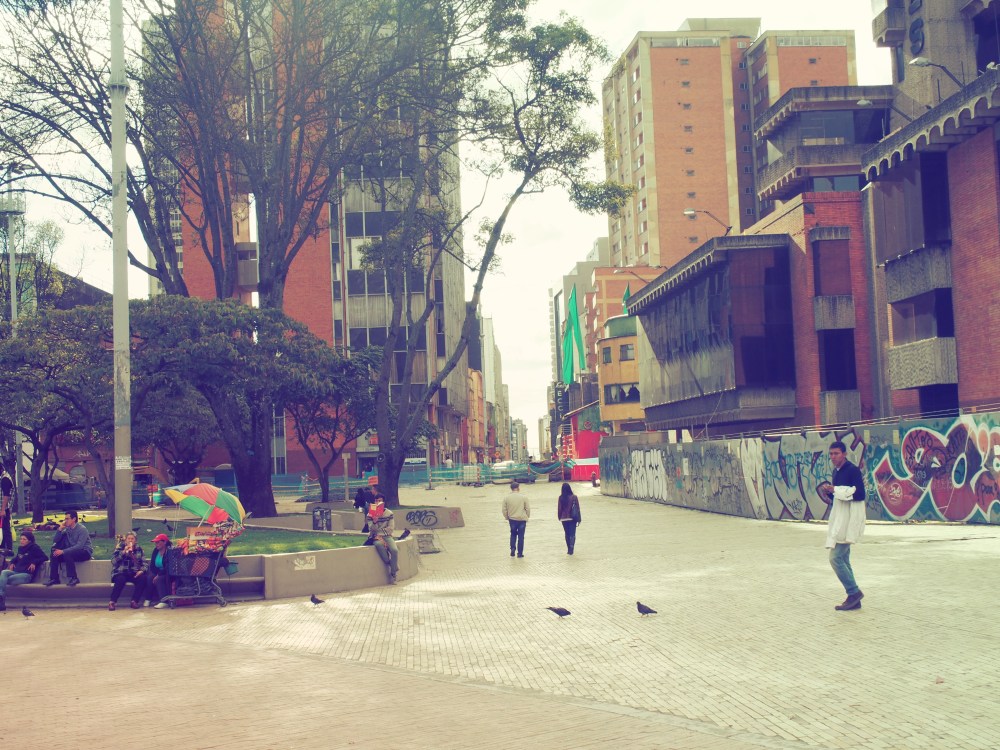
The trip back down let us see the city from a different side and we walked through the town past the university and main square past the grazing Lamas!


OLYMPUS DIGITAL CAMERA

Lamas in the square

OLYMPUS DIGITAL CAMERA

Bogota is a bright and vibrant city

Day 1 was amazing and we learned so much about the city, as well as taking far too many photos with our new camera! We finished the day off with a meal with others from our hostel and drank local brewed beer at the Bogota Beer Company. We are really looking forward to traveling to Ecuador tonight and will speak soon!

Chris and Hayley